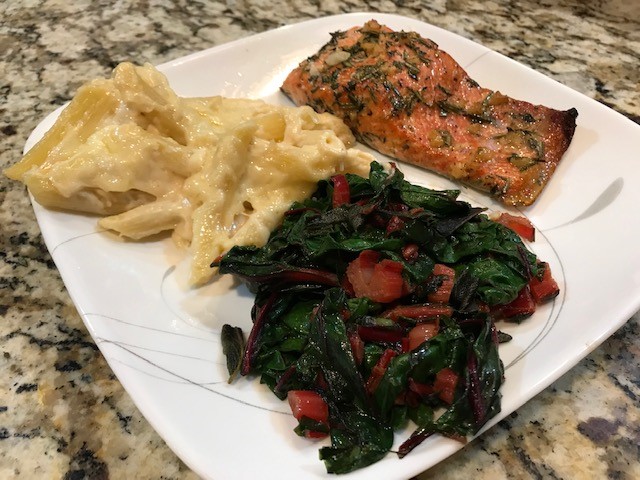
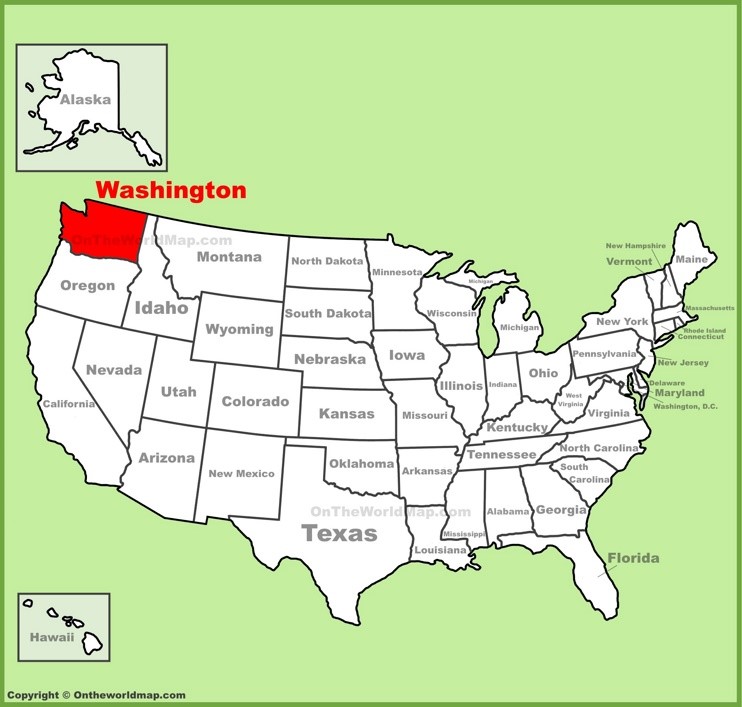
Washington’s Date of Statehood – November 11th, 1889
The Pacific Northwest is GORGEOUS. There are soaring mountains, the deep blue of the Pacific Ocean, and everything is so green. I’ve only been to Washington once, but I remember it having some of the best food I’ve had anywhere! Whether it is the abundant seafood, the bountiful vegetables, or the delicious variety at the Pike Place market in Seattle, the cuisine of Washington has a special place in my heart.
Tips and Tricks
There are 6 Main varieties of Salmon
- King (Chinook)
- Chinook are the most widespread Salmon in North America. They show up all the way from the deep Pacific waters of southern California to the ice-cold rivers of northern Alaska.
- Rich and buttery, King salmon is the highest in fat and omega-3 fatty acids.
- Due to its large size (average King salmon weighs about 40lbs, and some are even over 100lbs!), it comes in thick filets! And since they’re rare species, they’re quite expensive.
- Sockeye Salmon (Red)
- Sockeye Salmon live from Washington up along the Western Seaboard to Alaska. They also live in all the Great Lakes except Superior. On top of that, landlocked “Kokanee Salmon” are stocked in lakes around the US and Canada.
- Sockeye salmon are slimmest salmon, therefore they have lower fat content than King and Coho salmon.
- And it has the most salmon-y flavor (fishy, in the best way!). Due to its unique diet, there’s no farmed version of Sockeye. Plus, it’s more affordable than King and Coho salmon, which makes it the most popular choice among salmon lovers!
- Coho Salmon (Silver)
- They show up everywhere else you can find Chinook: the whole northern Pacific coast and all five Great Lakes.
- Coho salmon have delicate texture and subtle flavor.
- This type of salmon has moderate amount of fat, but it’s still rich in omega-3 fatty acids.
- Pink Salmon (Humpback)
- Pink Salmon are unique in that they only show up every other year. In Washington and BC, they spawn on years that end in an odd number. On even years, they head up to Alaska instead. You really need to time your trip to catch these little guys – or head to the Great Lakes, where you can find them year in, year out.
- These pale pink colored, small salmon are mild in taste and low in fat.
- They’re mostly processed into cans, but they’re also available frozen.
- Chum Salmon (Dog)
- Chum Salmon have the same native range as most Pacific Salmon: They start to show up in the northwestern mainland US and live all the way along Canada’s Pacific coast and up to the Gulf of Alaska. However, unlike other species, they were never introduced into the Great Lakes.
- Chum salmon is also small, low fat salmon. They’re the most popular for their egg roe, those beautiful bright orange balls served with sushi! If you’ve ever had ikura sushi, then you’ve tasted a part of chum salmon.
- Atlantic
- All Atlantic salmon on the market is farmed salmon, because wild Atlantic salmon are now rare species.
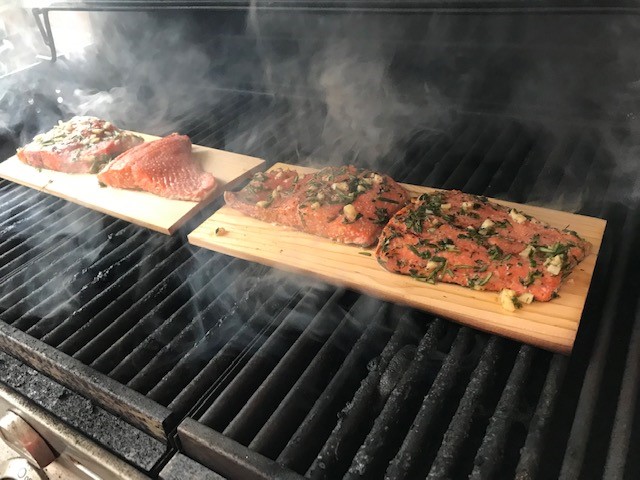
Cedar Plank Salmon with Lemon, Garlic, and Herbs
Serves 4
- 2 Large Cedar Planks, soaked in clean water for at least 1 hour
- 4 Salmon Fillets (6 oz. each)
- 1/4 Cup Olive Oil
- 1/2 tsp Salt
- 1/2 tsp Freshly Ground Black Pepper
- Zest from 2 Lemons
- 1 1/2 tsp Fresh Rosemary, leaves only and roughly chopped
- 1 1/2 tsp Fresh Thyme, leaves only and roughly chopped
- 2 Large Garlic Cloves, peeled and minced
Step 1: Place the salmon fillets in a large zip-tip bag. Add the olive oil, salt, pepper, lemon zest, fresh rosemary, fresh thyme, and minced garlic to the salmon. Seal the bag and gently manipulate the bag so that the fish was evenly coated in the oil and seasonings. Set the fish aside in the refrigerator for at least 30 minutes (and up to 4 hours.)
Step 2: Preheat the grill to medium-high. Once the grill is hot and the fish has marinated, take the cedar planks out of the water. Pat them dry.
Step 3: Place the fish, skin-side down, on the cedar planks and then place the planks directly on the hot grill. Shut the lid and grill for 12-15 minutes, or until salmon is done to the temperature you prefer.
Step 4: Remove the fish from the wooden plank and serve hot.
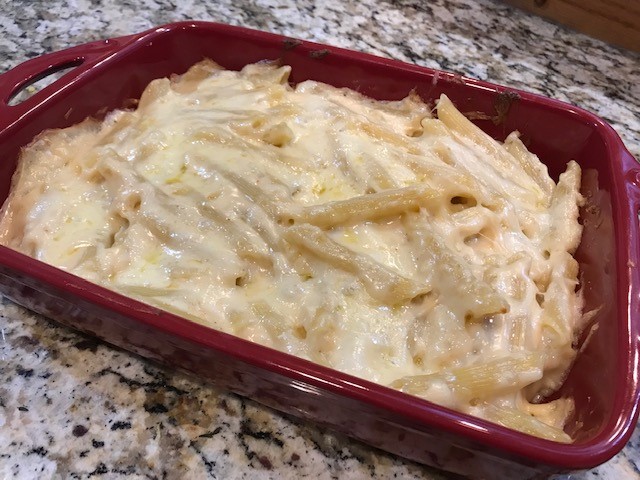
Beecher’s “World’s Best” Macaroni and Cheese
Sevres 4-6
- 8 oz. Penne Pasta
- 2 Cups (about 8 oz.) Beecher’s Flagship Cheddar Cheese, grated
- 1 1/2 Cups Whole Milk
- 2 Tbs plus 2 tsp All-Purpose Flour
- 2 Tbs Unsalted Butter
- 1/2 Cup Just Jack (Monterrey Jack) Cheese, grated
- 1/4 tsp Salt
- Pinch Chili Powder
- Pinch Garlic Powder
Step 1: Preheat the oven to 350 degrees.
Step 2: Prepare the penne pasta per the package directions EXCEPT cook the pasta for 2 minutes less than advised. Once the pasta is mostly cooked, drain, rinse with cold water, and set aside.
Step 3: Place a medium saucepan over medium heat. Add the 2 Tbs of unsalted butter and allow to melt. Once melted, whisk in the flour. Once thoroughly combined, cook the butter and flour mixture, constantly stirring, for 2 minutes.
Step 4: Add the milk very slowly, while whisking. Once all of the milk has been added, cook for an additional 10 minutes, whisking nearly constantly. The mixture will be very thick. Remove from the heat.
Step 5: Add in 1 3/4 Cups Flagship cheese, 1/4 Cup Monterrey Jack Cheese, salt, chili powder, and garlic powder. Stir until the cheese is melted and fully incorporated.
Step 6: Add the cooked and drained pasta to the cheese sauce and gently fold the noodles in. Once everything is carefully mixed, scrape the pasta and cheese sauce into am 8-inch baking dish. Spread the remaining cheese evenly over the top.
Step 7: Place the baking dish in the hot oven and bake, uncovered, for 20 minutes.
Step 8: Once baked, remove from the oven and allow to sit for 5 minutes before serving.
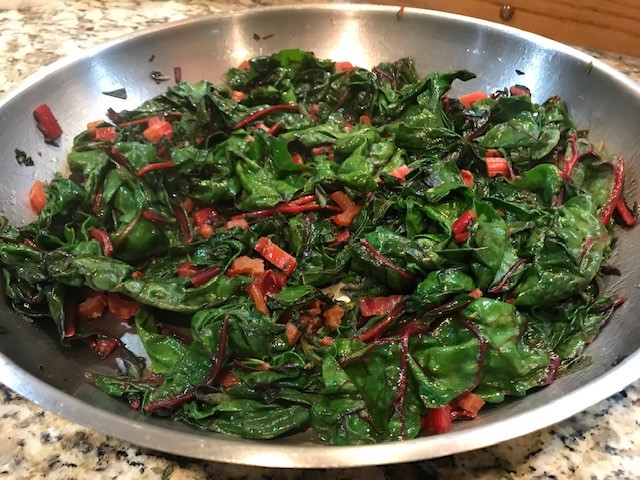
Rainbow Chard with Sage Brown Butter
Serves 4
- 2 Small Bunches of Rainbow Chard, rinsed
- 1/4 Cup Unsalted Butter
- 1 Handful (about 2 Tbs) Fresh Sage Leaves, roughly chopped
- Salt and Freshly Ground Pepper, to taste
Step 1: Prepare the chard by cutting the ends off of the stalks and separating the leaves from the stalks. Roughly chop the leaves into 2-3-inch pieces and slice the stalks thinly, like celery.
Step 2: Place a large skillet over medium heat. Once the pan is hot, add the butter and allow it to melt. Once melted, continue to cook the butter until the solids turn a medium brown and start to smell nutty, about 3 minutes.
Step 3: Once the butter is a light brown, add the sage and cook for 30 seconds, stirring constantly.
Step 4: Add the sliced chard stalks and cook until just tender, about 3 minutes.
Step 5: Add 1/3 of the chard leaves and cook, stirring constantly, for 1-2 minutes or until mostly wilted. Then, add the next third of the leaves and cook for 1- 2 minutes. Finally, add the last 1/3 of the chard leaves and cook until the leaves are wilted.
Step 6: Season with salt and pepper, as desired, and serve.
Fun Facts about Washington: 1. Mount St. Helen’s lost 1,131 feet of elevation in the May 1980 eruption and spewed forth about one cubic mile of dust, ash, and debris. The blast leveled over four billion feet of usable timber, enough to build 150,000 homes. 2. Everett, Washington is the site of the world’s largest building by volume, Boeing’s final assembly plant. 3. Despite New York coining the nickname “The Big Apple”, Washington is the state which produces the most apples out of all 50! They also produce the most pears, red raspberries, sweet cherries, and spearmint oil. 4. Washington is the birthplace of both Jimi Hendrix (Seattle) and Bing Crosby (Tacoma). 5. The world’s first soft-serve ice cream machine was located in an Olympia Dairy Queen.

