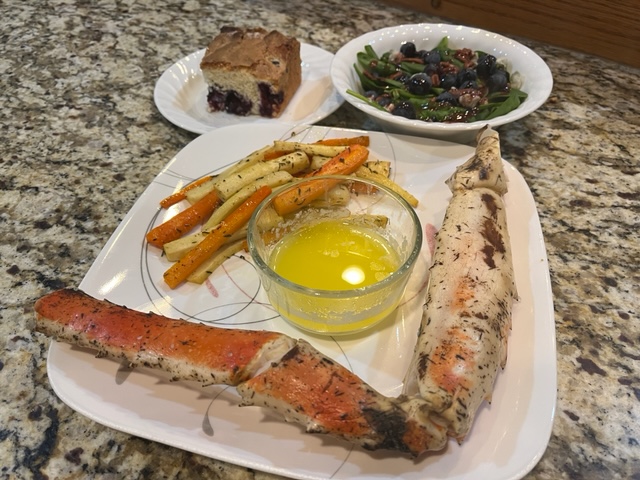
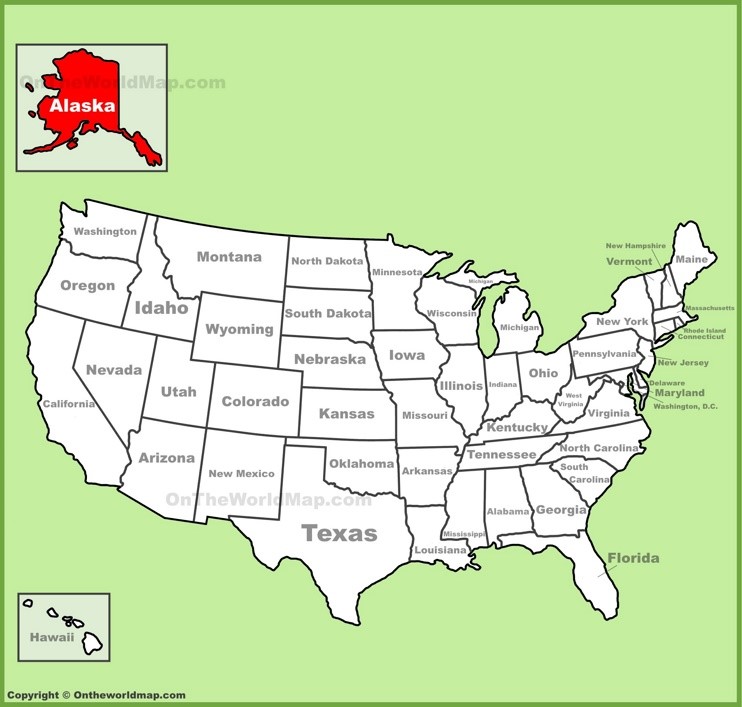
Trip #49 Alaska (West) Steamed Alaskan King Crab Legs, Maple Roasted Carrots and Parsnips, Sitka Salad, Alaskan Blueberry Cake

Alaska’s Date of Statehood – January 3rd, 1959

We are almost to the end of the blog and what we need is a trip to the great white north! Let us marvel at the massive moose, the great expanse of snow blanketing the terrain, and the most beautiful dancing lights of the Aurora Borealis all while eating some tasty crab legs! Alaska is one of those wild adventures that is a bucket list destination. So, lets feast on some tasty treats and dream of a winter wonderland!

Tips and Tricks

King crab cooks up best by steaming, boiling, or baking.

  • Thawing: Thaw your crab before cooking, either overnight in the refrigerator or by running it under cold water the day you’re cooking it. Check for thawing by squeezing the biggest section of the leg — it should “give” a little.
  • Steaming: Cover and steam thawed snow crab for 5 to 7 minutes, king crab for 4 to 8 minutes.
  • Boiling: Add spices and seafood or other seasonings to boiling water to give your crab extra flavor. Bring a pan of water to a boil. King crab takes only 4 to 6 minutes.
  • Baking: Wrap the crab in a double sheet of aluminum foil, and then roll up the top, leaving a small hole for the steam to escape. Bake king crab for 4 to 7 minutes.
  • Grilling: Wrap thawed crab in a doubled foil wrap or packet and seal it. Place about four to six inches from a medium-high heat source and cook for 6-8 minutes. Time may vary depending on grill.
  • Broiling: Put crab on a cookie sheet and place sheet 7-8 inches from the broiling element for about 4-6 minutes.

Steamed Alaskan King Crab Legs

Serves 2

  • 2 Whole Alaskan King Crab Legs
  • Butter, melted

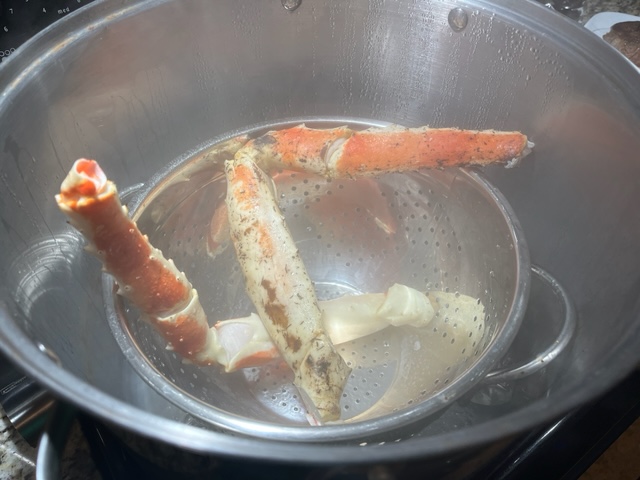
Step 1: Place a large pot on the stove. Add a metal colander or steamer basket to the pot and add an inch or 2 of water, making sure that the water is not in the steamer basket. You can add balled-up pieces of aluminum foil to the pot first the keep the steamer basket off of the bottom of the pot. Turn the heat to HIGH and allow the water to come to a rolling boil.

Step 2: Once the water is boiling, add the crab legs to the steamer basket, cover, and steam for 5 minutes, or until just heated through.

Step 3: Remove the crab from the pot and serve hot with melted butter for dipping.
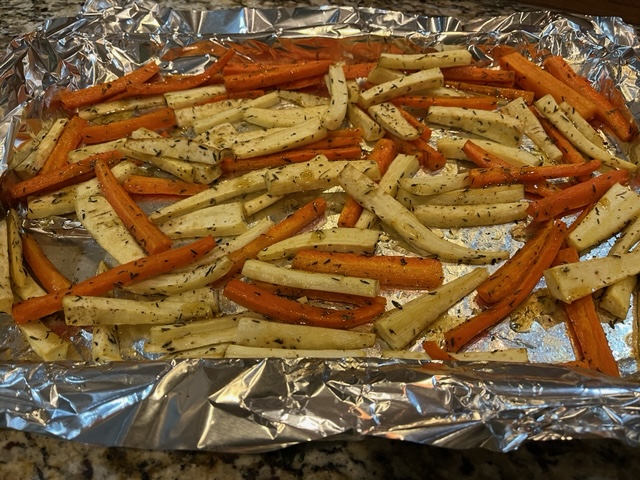
Maple Roasted Carrots and Parsnips

Serves 4

  • 1 lb. Carrots, peeled and cut into sticks
  • 1 lb. Parsnips, peeled and cut into sticks
  • 3 Tbs Olive Oil
  • 2 Tbs Maple Syrup
  • 1 Tbs Whole Grain Mustard
  • 1 tsp Dried Thyme
  • Salt and Pepper, to taste

Step 1: Preheat the oven to 400 degrees.

Step 2: Line a large baking sheet with aluminum foil and spray with non-stick spray.

Step 3: In a small bowl, whisk together the olive oil, maple syrup, mustard, and dried thyme. Place the cut vegetables into a large, zip-top bag and drizzle most of the liquid over them. Close the bag and gently manipulate the contents until all of the vegetables are coated.

Step 4: Pour the contents of the bag onto the prepared baking sheet and spread them out into a single layer. Season everything with salt and pepper.

Step 5: Place the baking sheet into the hot oven and roast for 15 minutes. Then, gently stir and turn the vegetables on the sheet. Return the pan to the oven and roast for another 15-20 minutes.

Step 6: Remove the cooked vegetables from the oven and drizzle over the remaining oil/maple syrupy mixture and gently toss.

Step 7: Serve warm.
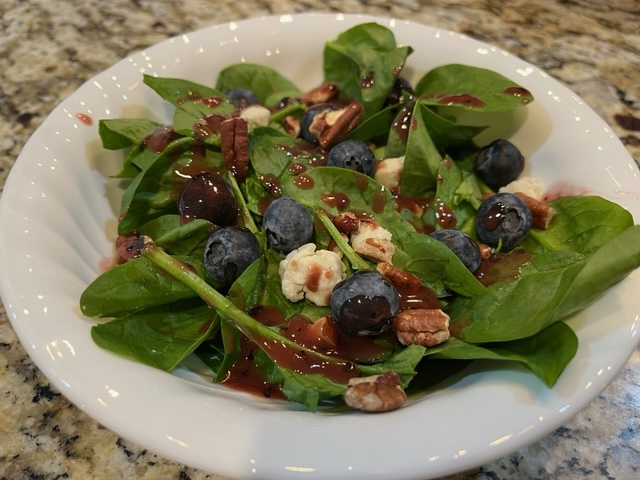
Sitka Salad

Serves 4

Salad

  • 1 Package of Fresh Spinach
  • 1 Cup Fresh Blueberries
  • 1 Cup Blue Cheese Crumbles
  • 1/ Cup Pecans, chopped

Dressing

  • 1/2 Cup Fresh Blueberries
  • 3/4 Cup Vegetable Oil
  • 2 Tbs White Vinegar
  • 2 Tbs Balsamic Vinegar
  • 2 Tbs Honey

Step 1: In a food processor, combine the vegetable oil, blueberries, white vinegar, balsamic vinegar, and honey. Blend until the dressing is smooth.

Step 2: In individual serving bowl, make a bed of spinach and top with an even amount of blueberries, blue cheese, and pecans.

Step 3: Serve the salad cold with the blueberry dressing drizzled over top.
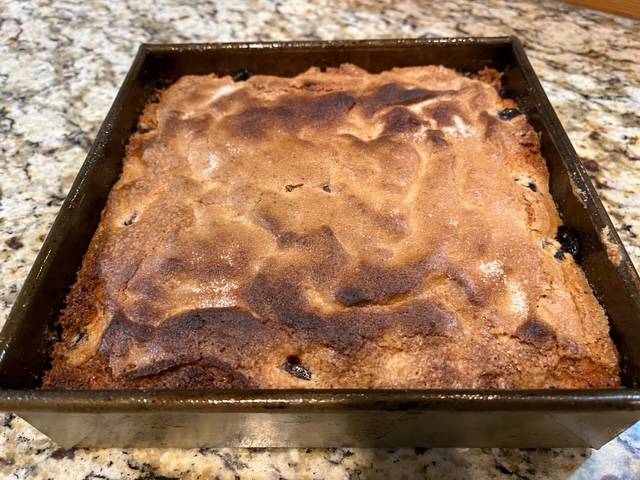
Alaskan Blueberry Cake

Serves 8-10

  • 2 Eggs, whites and yolks separated
  • 1/4 tsp Salt
  • 1 Tbs Baking Powder
  • 1 Cup Sugar
  • 1 tsp Vanilla Extract
  • 1/3 Cup Milk
  • 1/2 Cup Vegetable Shortening
  • 1 1/2 Cup Flour
  • 1 1/2 Cup Fresh Blueberries
  • 1 Tbs Flour
  • Sugar, for topping

Step 1: Preheat the oven to 350 degrees.

Step 2: Place the eggs whites in a clean bowl and beat with a hand mixer until they are stiff. Add 1/4 cup of sugar to the mixture and mix until combined. Set aside.

Step 3: In the bowl of a stand mixer, cream together the shortening, salt, and vanilla until smooth. Then, while mixing on low slowly add in the remaining 34/ cup of sugar until combined.

Step 4: Add the egg yolks one at a time and beat until well combined. The mixture should look light and creamy.

Step 5: In a medium bowl, whisk together the flour and baking powder. Add 1/3 of the flour to the egg yolk mixture and mix. Then, add 1/3 of the milk and mix. Continue this way until all of the flour and milk have been added to the mixture.

Step 6: Once the batter has been mixed, add the egg whites and gently fold them into the mixture.

Step 7: Add the blueberries to a large bowl. Sprinkle the 1 Tbs of flour over the berries and toss them to dredge. Add the floured berries to the batter and gently fold them in.

Step 8: Grease an 8-inch square pan and pour the batter into it. Sprinkle some sugar over the top of the cake and place into the hot oven.

Step 9: Bake for 50-60 minutes or until a toothpick inserted into the center comes out clean.
Fun Facts about Alaska: 1. Alaska has the lowest population density in the nation at one person per square mile.  2. The northernmost, easternmost, and westernmost points in the U.S. are found in Alaska. Point Barrow in the north and both the eastern and western points are in the Aleutian Chain. Pochnoi Point on Semisopochnoi Island in the Aleutians is considered the easternmost point and Amatignak Island is the westernmost point because it lies east of the 180-degree longitude. 3. Barrow has both the longest and shortest amount of daylight in the state. When the sun rises on May 10, it doesn’t set for nearly three months. When it sets on November 18, Barrow residents do not see the sun again for nearly two months. 4. The aurora borealis (northern lights) can be seen an average of 243 days a year in Fairbanks. The northern lights are produced by charged electrons and protons striking the earth’s upper atmosphere. 5. Of the 20 highest peaks in the U.S., 17 are in Alaska, including the highest peak in North America (20,320 feet above sea level), Denali.  6. Alaska has more coastline than the rest of the U.S. combined (more than 34,000 miles.) 7. The nation’s two largest forests are located in Alaska. The Tongass in Southeast includes 16.8 million acres and Chugach in Southcentral has 4.8 million acres.
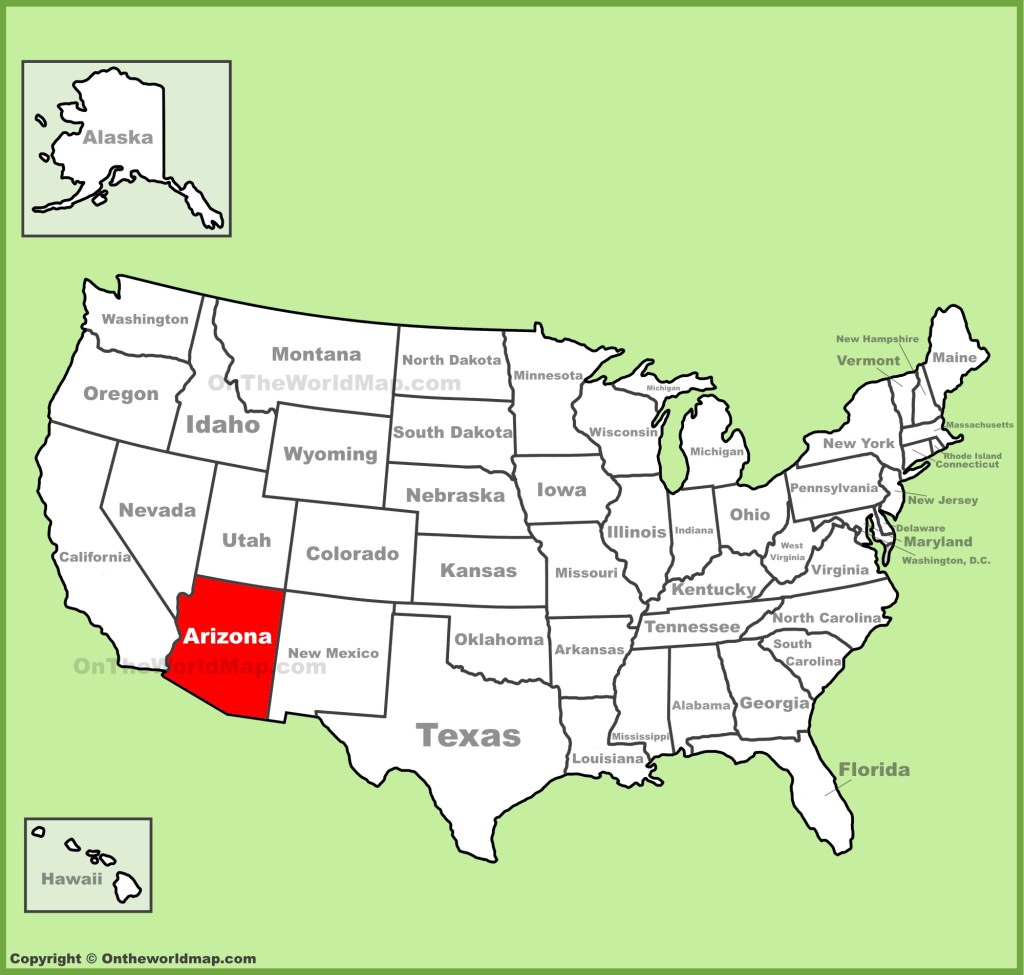
Trip # 48 Arizona (Southwest) Chimichangas, Arizona Southwest Rice Pilaf

Arizona’s Date of Statehood – February 14th, 1912

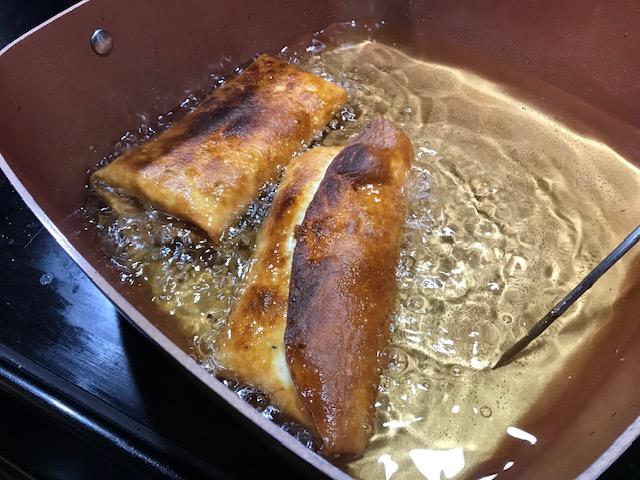
One of the things I’ve learned through doing this and my international cooking blog (EDIBLEUN.wordpress.com) is that so many of our favorite things began as accidents. Chocolate chip cookies? Accident. Potato Chips? Vindictive accident. One of my favorite Mexican restaurant staples, chimichangas? Accident! While the origins of the chimichanga is up for some debate, the most circulated story is of Monica Flin, the founder of the Tucson, Arizona, restaurant El Charro, accidentally dropping a burrito into the deep-fat fryer in 1922. These fried burritos became so popular across, they are considered the unofficial state food of Arizona!

Tips and Tricks

  1. When deep frying, temperature control is key. Adding food, taking food away, etc. changes the oil temperature. So, to get the best end result, be sure to raise and lower the temperature as need to keep it evenly between 350-375 degrees.
  2. You have to use flour tortillas. Corn tortillas will crack when you try to roll them up.
  3. Enchilada sauce is usually found in the Mexican section of your grocery store.
  4. Be sure to assemble your chimichangas RIGHT before you fry. So, if you are making 6 Chimichangas, only put 2 together at a time (you should only fry 2 at a time.) If you assemble them all, the sauce from the filling will soak into the tortillas, making them mushy and fragile.

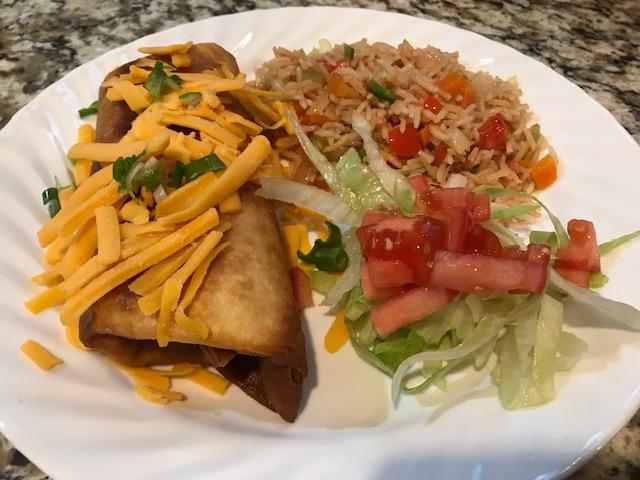
Chimichangas

Serves 6

  • 6 Flour Tortillas, 12-14 inch in diameter
  • 1 lb. Ground Beef
  • 1 Medium Yellow Onion, peeled and diced
  • 1/2 Cup Mild Red Enchilada Sauce
  • Salt and Pepper, taste
  • Vegetable Oil, to fry
  • 2 Cups Cheddar Cheese, shredded
  • 2 Cups Iceberg Lettuce, shredded
  • 3 Green Onions, root removed and chopped
  • 1 Red Tomato, stem removed and chopped

Step 1: Place a large, metal rack in the oven. Place a large cookie sheet under the rack. Preheat the oven to 170 degrees. You’ll need to fry 2 chimichangas at a time. Once they are golden brown, you’ll remove the chimichangas from the oil and set them on the rack in the oven to drain and keep warm until all chimichangas are fried.

Step 2: Place a large skillet over medium heat. Once the skillet is hot, add the ground beef and cook, stirring frequently, until the meat is browned.

Step 3: Drain all the fat, leaving the beef in the skillet. Add the diced onion, enchilada sauce, salt, and pepper to the beef. Stir until everything is well combined. Cook for 2-3 minutes or until the onions are soft. Remove the skillet from the heat and set aside.

Step 4: Place a deep skillet over medium-low heat and add 2 inches of vegetable oil. Heat the oil to 365 degrees.

Step 5: Place the tortillas on a microwave safe plate and cover them with a damp paper towel. Microwave on high for 15 seconds, or until the tortillas are warm.

Step 6: Take 1 tortillas from the stack and replace the warm, damp paper towel over the other tortillas. Place 1/6 of the filling into the center of the warm tortilla. Pull the bottom of the tortilla up and cover the filling. Then, fold the left side of the tortilla into the center, followed by the right side. Roll the chimichanga into a fat tube until the filling is completely covered by the tortilla. Secure each end with toothpicks so the chimichanga stays closed in the oil. Repeat with one more tortilla so you have two completely assembled chimichangas.

Step 7: Lower the two chimichangas into the oil and fry for 1 1/2 minutes. Flip the chimichangas over and fry the other side for 1 1/2 minutes or until everything is golden brown and crispy.

Step 8: Using a slotted spoon, remove the chimichangas from the oil and allow them to drain on the metal rack in the warm oven. Repeat steps 5-7 until all of the chimichangas are fried.

Step 9: Place a hot chimichanga on a plate and sprinkle 1/6 of the cheddar cheese over it. Serve with shredded iceberg lettuce, diced tomatoes, and chopped green onions.

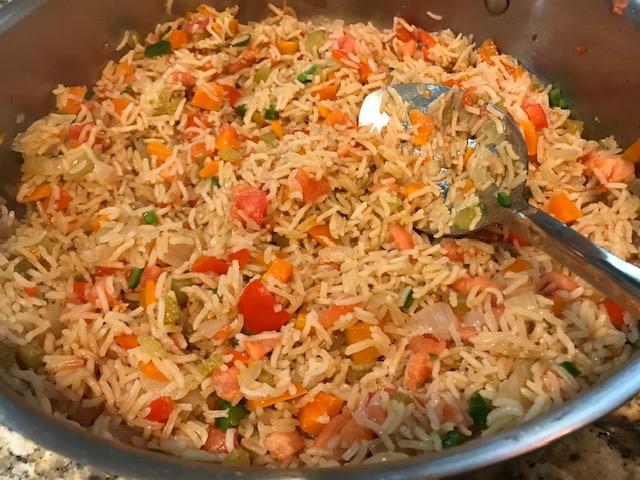
Arizona Southwest Rice Pilaf

Serves 4-6

  • 3 Tbs Olive Oil
  • 1 Medium Yellow Onion, peeled and diced
  • 1 Red Bell Pepper, stem and seeds removed and diced
  • 1 Carrot, peeled and diced
  • 1 Stalk of Celery, leaves and root removed and diced
  • 1 Cup Long-Grain White Rice, uncooked
  • 1 Can (14.5 oz.) Beef Broth
  • 1 Tomato, diced
  • 1 Jalapeno Pepper, stem removed and diced

Step 1: Place a large skillet with high sides over medium-high heat. Once the pan is hot, add the olive oil. When the oil starts to shimmer, add the onion, red bell pepper, carrot, and celery.

Step 2: Cook the vegetables until the onions start to turn brown and are softened, about 7 minutes.

Step 3: Add the uncooked rice to the skillet and stir to thoroughly combine.

Step 4: Add the beef broth to the skillet. Once the broth starts to boil, cover the skillet, reduce the heat to low, and cook for 20 minutes, or until all of the broth is absorbed.

Step 5: Once the rice is cooked, add the diced tomato and diced jalapeno and stir to combine.

Step 6: Serve warm.

Fun Facts about Arizona: 1.  The McDonald’s in Sierra Vista, Arizona opened the company’s first drive-through window. 2. In 1968, Robert P. McCulloch, Sr., the founder of Lake Havasu City, bought the world’s largest antique, The Original London Bridge, for $2.46 million. The structure was dismantled, each of the 10,276 granite blocks were numbered, then shipped from London to Arizona, and painstakingly reassembled. The deal also included ornate lampposts made from Napoleon Bonaparte’s cannons captured at Waterloo. 3. Arizona leads the nation in copper production. The amount of copper on the roof of the Capitol building is equivalent to 4,800,000 pennies. 4. Arizona is home of the Grand Canyon National Park. 5. The world’s largest solar telescope is located at Kitts Peak National Observatory in the city of Sells.

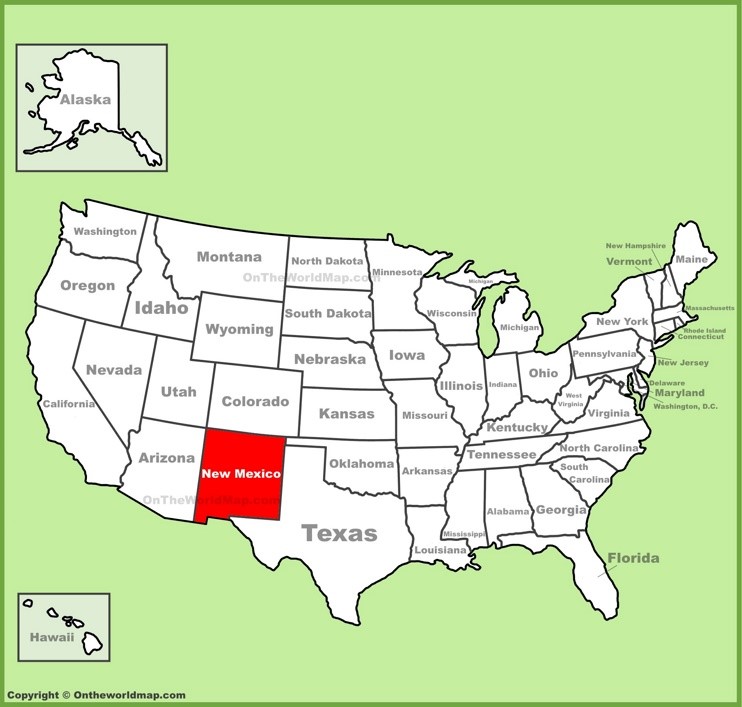
Trip #47 New Mexico (Southwest) Posolé, New Mexico Chopped Salad

New Mexico’s Date of Statehood – January 6th, 1912

New Mexico is home to some really beautiful and interesting sites. Carlsbad Caverns, Petroglyph National Park, Cliff Dwellings, and ALIENS, just to name a few. And along with these amazing sites comes delicious food, steeped in the rich traditions of Mexican cuisine and local availability. So, today, let’s take a trip to the homey and tasty state of New Mexico!

Tips and Tricks

  1. Posole is also known as hominy. Depending where you are, the corn ingredient in the stew may be under of if those two names.
  2. A ‘New Mexico” chili is technically a Hatch Chili. Again, depending on where you live, you may have trouble finding this ingredient unless you know what else it goes by. For myself, I ordered both the dried hominy and dried NEW MEXICO chilis from Amazon.
  3. Pork Shoulder may also be packaged under pork butt or “Boston butt.”

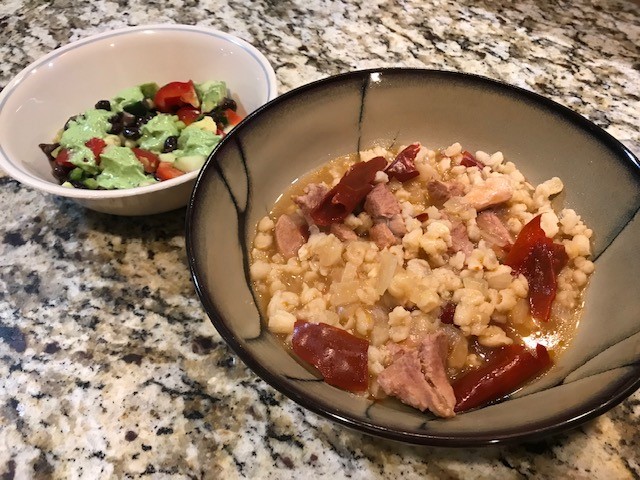
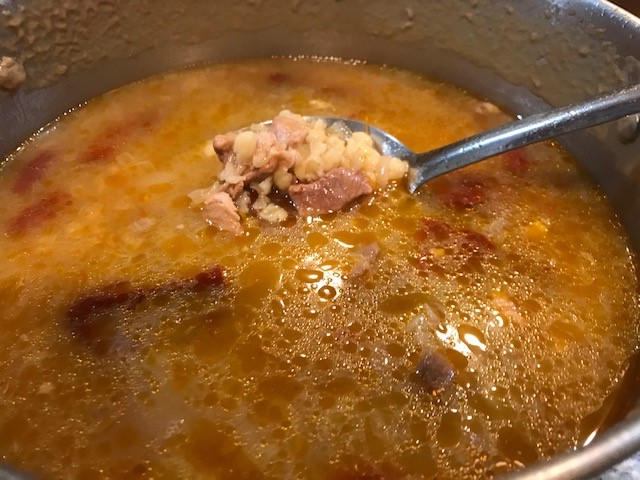
Posolé

Serves 8-10

  • 6 Dried New Mexico Red Chilis, stems and seeds removed and finely chopped
  • 1 1/2 lbs. Pork Shoulder, cut into small pieces
  • 6 Quarts of Water
  • 1 lb. Dried White Posole
  • 2 Medium Yellow Onions, peeled and diced
  • 10 Cloves of Garlic, peeled and minced
  • 1 tsp Salt

Step 1: In a large pot, place the dried posole, pork, chopped dried chilis, and water and turn the heat to high. Once the water is boiling, cover the pot, reduce the heat to low, and simmer for 1 hour.

Step 2: After the 1 hour, add the onions, garlic, and salt and stir to combine. Cover the pot and simmer for an additional 1 hour or until the dried posole is soft.

Step 3: Serve hot.

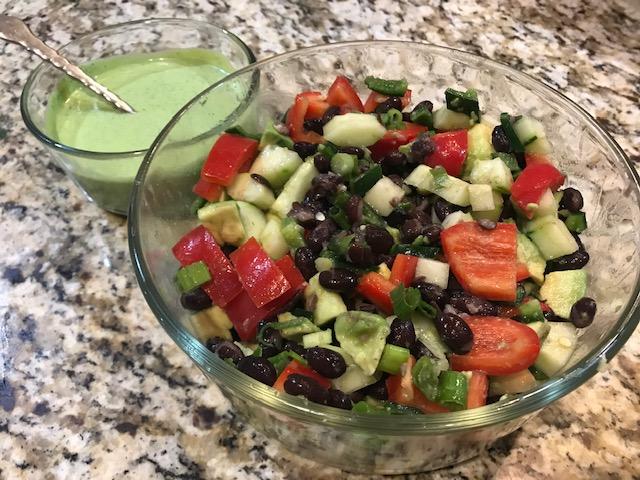
New Mexico Chopped Salad

Serves 4

Salad

  • 2 Poblano Peppers, stemmed, seeded, and chopped
  • 1 Red Bell Pepper, stemmed, seeded, and chopped
  • 1 Cucumber, peeled, seeded, and chopped
  • 3 Green Onions, root removed and chopped
  • 1 Can Black Beans, rinsed and drained
  • 2 Avocados, peeled, seed removed and chopped (save 1/2 an avocado for the dressing below)
  • Juice of 1 Lime
  • Salt, to taste

Green Dressing

  • 1/2 an Avocado (from recipe above,) peeled and seed removed
  • 3/4 Cup Sour Cream
  • 1/4 Cup Olive Oil
  • 1/2 Cup Fresh Cilantro, leaves only
  • 1/2 Cup Fresh Flat-Leaf Parsley, leaves only
  • 1 Green onion, root removed and roughly chopped
  • 1/4 tsp Salt

Step 1: Place the chopped avocado in small bowl. Add the lemon juice and salt to the avocados and gently stir to combine, set aside.

Step 2: In a food processor, blend 1/2 an avocado, sour cream, olive oil, cilantro, parsley, salt, and green onion until smooth. If the dressing is too thick, add more oil until it reaches a consistency you like. Set aside.

Step 3: In a medium bowl, combine the chopped poblano pepper, red bell pepper, cucumber, green onions, black beans, and marinated avocados (plus any lime juice left in the bowl) and gently toss to combine.

Step 4: Serve cold with the green dressing.

Fun Facts about New Mexico: 1. For at least 1,000 years, the people of Taos Pueblo have lived in their surreal, multi-story-apartment-like town. Human habitation of the area dates back perhaps 5,000 years, but it wasn’t until around 1,000 AD that the current adobe dwellings were constructed by two different groups of Tiwa peoples who came together to build the still-thriving community. 2. New Mexico has more PhDs per capita than any other state. 3. Santa Fe was founded 10 years before the Pilgrims landed at Plymouth. Santa Fe is not only the oldest European city west of the Mississippi River; it’s the oldest capital city in North America, dating to 1610. 4. On July 16, 1945, the very first atomic bomb was detonated in the desert sands of the Jornada del Muerto in south-central New Mexico. 5. New Mexico has more cows than people. 6. It’s home to the largest hot air balloon festival in the world.

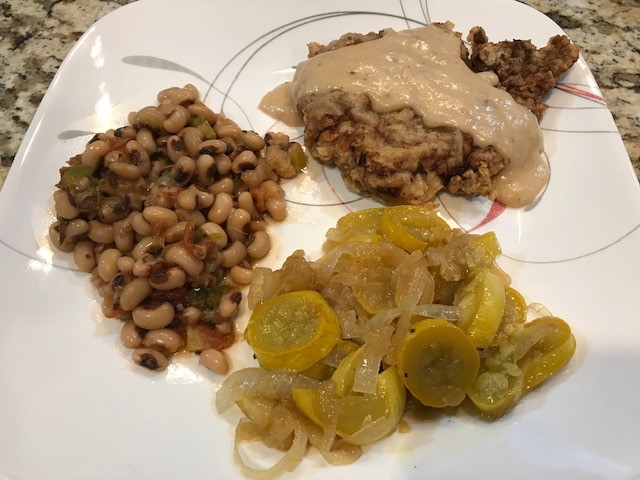
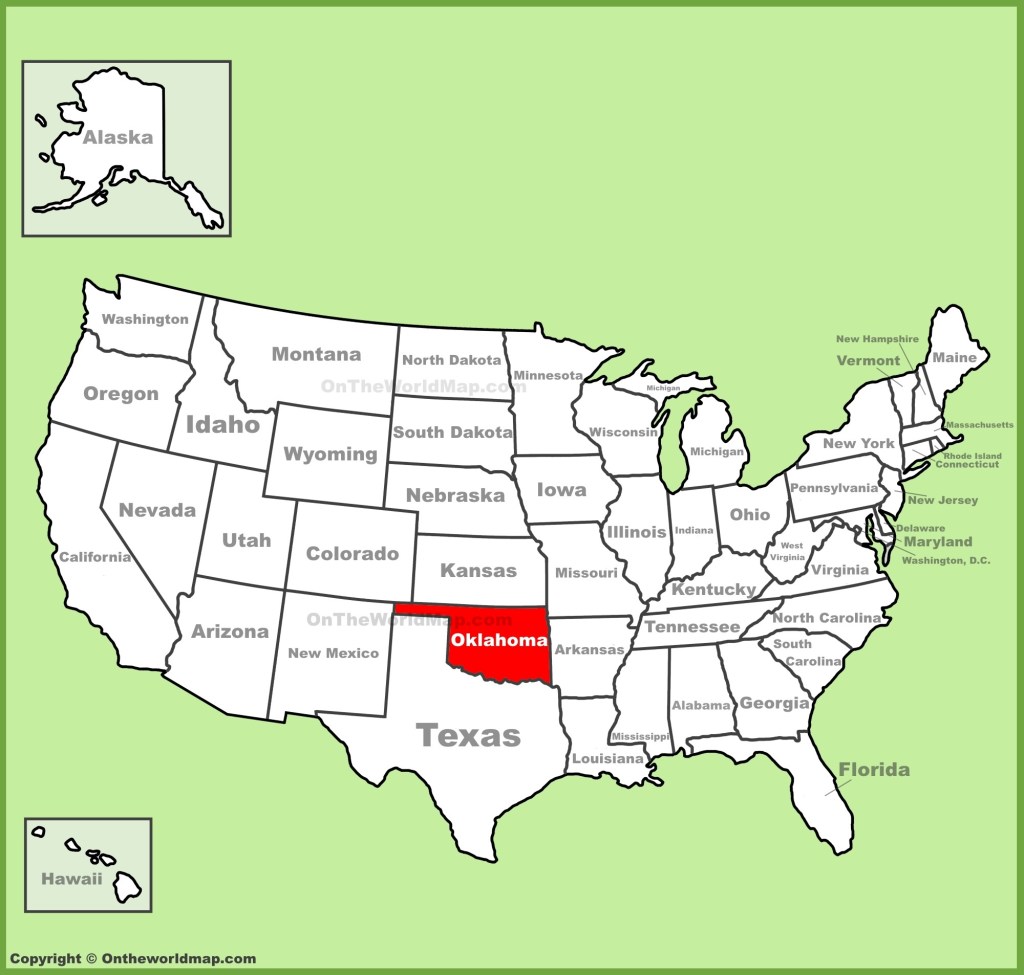
Trip #46 Oklahoma (Southwest) Chicken Fried Steak and Gravy, Oklahoma Black-Eyed Peas, Sautéed Squash and Onions

Oklahoma’s Date of Statehood – November 16th, 1907

OOOOOOOOOOOKLAHOMA WHERE THE WIND COMES SWEEPING DOWN THE PLAINS… It is a reflex, sorry about that. Oklahoma is the only state in the project that has an OFFICAL state meal. Well, it really like the official state buffet. In 1988, the legislature declared the OFFICAL state meal to consist of fried okra, cornbread, barbecue pork, squash, biscuits, sausage and gravy, grits, corn, strawberries, chicken fried steak, pecan pie, and black-eyed peas. That makes me sleepy just thinking about all that deliciousness! So, for the sake of my sanity, I picked three from the above; chicken fried steak, black-eyed peas, and yellow squash. YUM!

Tips and Tricks

  1. When dealing with cube steak or round steak, the trick is to pound them thin. This is also the secret to tender, juicy chicken breast! To do this:
    • Place each steak between two pieces of plastic wrap.
    • Using a meat mallet, rubber mallet, rolling pin, or empty wine bottle, beat the steak until it is very thin, less than 1/4-inch thick.
    • Turn the steak often, as you pound, and make sure you stretch out the plastic wrap every so often; it will wrinkle as you work.

Chicken Fried Steak and Gravy

Serves 4

Chicken Fried Steak

  • 4 Quarter-Pound Cube Steaks
  • 1/2 tsp Salt, for seasoning the steaks
  • 2 Cups All-Purpose Flour
  • 1/2 tsp Salt, for the breading
  • 1 1/2 tsp Garlic Powder
  • 1/4 tsp Cayenne Pepper
  • 2 Eggs
  • 1/2 Cup Milk
  • Vegetable Oil, for frying

Gravy

  • 3 Tbs Frying Oil, once steaks have been fried
  • 3 Tbs Flour
  • 1/4 Cup Heavy Whipping Cream
  • 1 3/4 Cup Milk
  • 1/2 tsp Freshly Ground Black Pepper

Step 1: Place a metal rack over a large baking sheet and place both the rack and baking sheet into the over. Preheat the oven to 200 degrees. (This is where the fried steaks will stay warm while we make the gravy.)

Step 2: Sprinkle the 1/2 tsp of salt evenly over both sides of all the steaks.

Step 3: Place a skillet with deep sides over medium-low heat. Add enough oil to come up about 1/4 of an inch up the sides of the pan. You want to heat the oil to 350 degrees.

Step 4: Place two shallow dishes (I prefer pie pans) on your work surface. Into the first dish, whisk together the 2 eggs and 1/3 Cup of milk. In the second pan, whisk together the 2 Cups of flour, 1/2 tsp Salt, garlic powder, and cayenne pepper.

Step 5: Take one steak and dredge it in the seasoned flour. Shake off any excess. Then, take that steak and dip it in the egg mixture. Then, take the now wet steak and dredge it again in the seasoned flour, gently shaking off any excess. Set this steak aside and repeat until all cube steaks have been breaded.

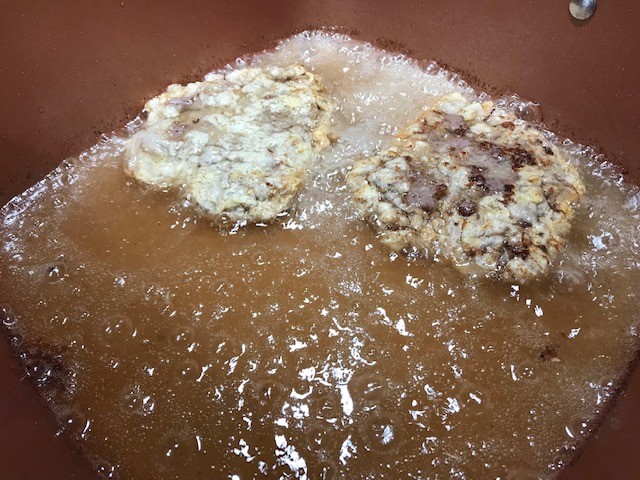
Step 6: Once the steaks have been breaded and the oil is 350 degrees, add two steaks to the hot oil and fry until the edges turn golden brown, about 3 minutes. Carefully flip the steaks over and fry for another 3 minutes. Once both sides are golden brown, remove the steaks from the oil and place them on the wire rack in the warm oven. Repeat the frying process until all the meat and been fried.

Step 7: Now it is time to make the gravy. Take 3 Tbs of the frying oil and place it in a large skillet over medium heat. Add the 3 Tbs of flour to the oil and whisk constantly until the roux turns a light brown color, about 4-5 minutes.

Step 8: Once the fat/flour mixture is a light brown color, add the heavy cream and whisk until the mixture is smooth. Add 1 cup of the milk and whisk until combined. Then, continue to add milk, 1/4 cup at a time, until the gravy reaches a texture you like. Season with pepper.

Step 9: Serve the chicken-fried steaks warm, covered in gravy.

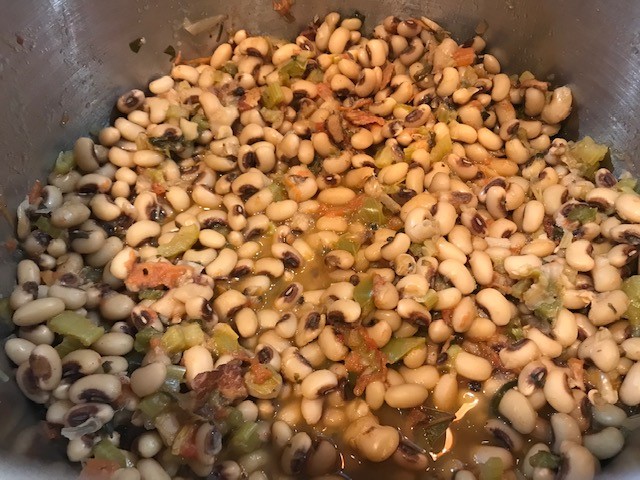
Oklahoma Black-Eyed Peas

Serves 8-10

  • 2 Strips of Bacon, chopped
  • 1 Small Yellow Onion, peeled and diced
  • 1 Green Bell Pepper, stems and seeds removed and diced
  • 3 Ribs of Celery, leaves and root removed and diced
  • 2 Large Tomatoes, stem removed and diced
  • 1 Tbs Sugar
  • 1 Bay Leaf
  • 1 Handful Fresh Basil, chopped (about 1 Tbs)
  • 1/4 tsp Salt
  • 1/4 tsp Freshly Ground Black Pepper
  • 1 15oz. Packages Frozen Black-Eyes Peas
  • 1 Cup of Water

Step 1: Place a large pot on a cold stove. Lay the chopped bacon in a single layer in the cold pan. Turn the heat to medium and cook the bacon, turning occasionally, until the crispy and brown, about 5-6 minutes.

Step 2: Once the bacon is crisp, use a slotted spoon to remove the meat from the fat and allow it to drain on a paper towel lined plate. Set aside.

Step 3: Add the chopped onion, green bell pepper, and celery to the bacon fat and cook, stirring frequently, until the onions begin to brown, about 5 minutes.

Step 4: Once the vegetables are browed and soft, add the water, crumbled bacon, chopped tomatoes, sugar, bay leaf, basil, salt, and pepper. Stir to thoroughly combine.

Step 5: Increase the heat to high. Once the water starts to simmer, reduce the heat to low, cover, and cook for 1 and 1/2 hours, stirring occasionally.

Step 6: Serve hot once the beans are soft.

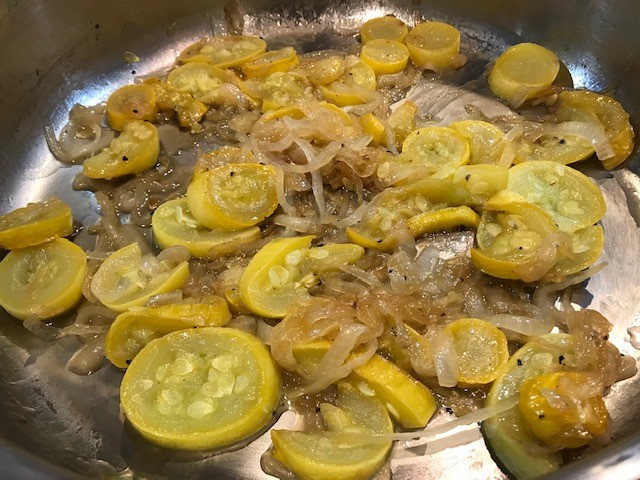
Sautéed Squash and Onions

Serves 4

  • 2 Medium Yellow Squash, cut into 1/2-inch rounds
  • 1 Medium Yellow Onion, peeled, halved, and thinly sliced
  • 2 Tbs Unsalted Butter
  • 1/4 tsp Salt
  • 1/4 tsp Freshly Ground Black Pepper
  • 1 1/2 Tbs Brown Sugar

Step 1: Place a large skillet on the stove over medium heat. Once the pan is hot, add the butter and allow it to melt. Once the butter has melted, add the sliced onions and cook until they are soft, about 5 minutes.

Step 2: Add the squash, salt, pepper, and brown sugar to the onions. Gently stir to thoroughly combined.

Step 3: Once combined, cover and cook for 20 minutes, stirring once or twice during cooking.

Step 4: After 20 minutes, uncover the squash and allow to cook for 8 additional minutes. Allow the liquid the reduce into a slightly thick glaze.

Step 5: Serve hot.

Fun Facts about Oklahoma: 1. The world’s first parking meter was installed in Oklahoma City on July 16, 1935. 2. Per square mile, Oklahoma has the most tornadoes of all U.S. states. 3. Okmulgee owns the world record for largest pecan pie, pecan cookie, pecan brownie, and biggest ice cream and cookie party. Each June, Okmulgee host the annual Pecan Festival. 4. Oklahoma’s Cimarron County is bordered by more states than any other U.S. county: Oklahoma, Texas, New Mexico, Colorado and Kansas. 5. Oklahoma is the only state in the U.S. that produces Iodine. It is also one of the only four states that produce Helium. 6. Shopping carts were first invented and used in Oklahoma before they were used anywhere else in the world. Sylvan Goldman, the owner of the Humpty Dumpty supermarket chain in Oklahoma City, came up with an idea to build shopping carts to assist his customers in shopping. 7. With more than 200, Oklahoma has the largest number of man-made lakes of any state in the United States. 8. After California, Oklahoma has the second largest Native American population in the country.

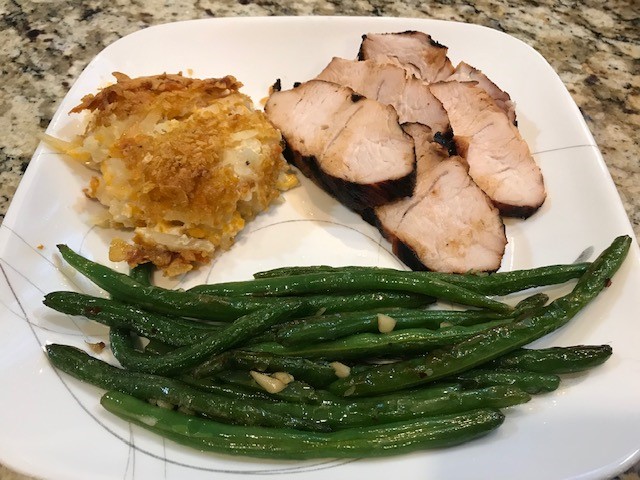
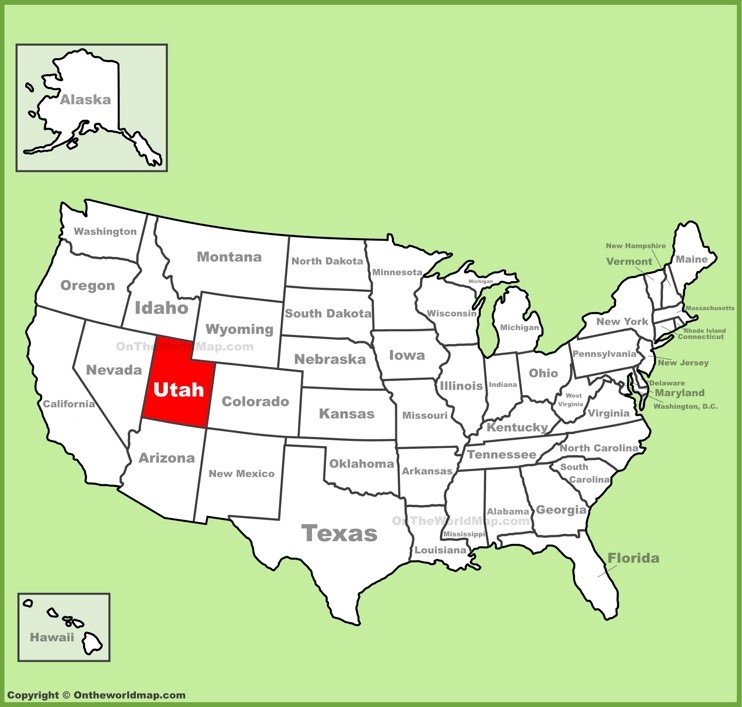
Trip #45 Utah (West) Grilled Manti Turkey Breast Tenderloins, Utah Funeral Potato Casserole, Spicy Green Beans

Utah’s Date of Statehood – January 4th, 1896

Utah is one of those places that takes you be surprise. I didn’t know what I expected the first time I went to Salt Lake City, but it wasn’t the absolute beauty I saw! The expanse of the Great Salt Lake on one side, a golden red sand desert, and snowcapped mountains…all in one view! It was incredible. The air was fresh, the people were friendly, and the food was fantastic. So, here is my small salute to Utah. I hope you enjoy it as much as we did!

Tips and Tricks

  1. When mixing the funeral potato casserole, use yours hands. Yes, it will be very cold. But there really is no better way to get all those ingredients thoroughly mixed without crushing the hash browns.
  2. It takes more work, but shred your own cheese. Pre-shredded cheese is mixed with anti-caking agents to keep the cheese separated. It doesn’t really affect the flavor, but it does affect how the cheese melts.
  3. When recipes call for Turkey breasts, they general mean turkey breast tenderloins, which usually come 2 to a package. A full turkey breast is MUCH large and takes much more time to thaw and roast.

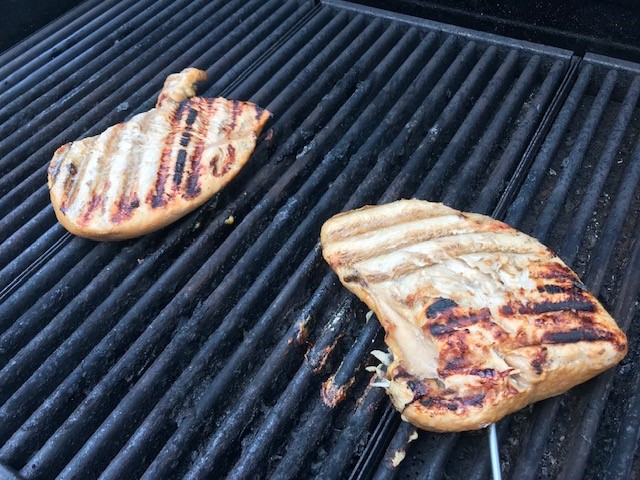
Grilled Manti Turkey Breast Tenderloins

Serves 4

  • 1/2 Cup Soy Sauce
  • 1/2 Cup Canola Oil
  • 1 Cup Sprite
  • 1/2 tsp Prepared Horseradish
  • 1/2 tsp Garlic Powder
  • 2 Turkey Breast Tenderloins.

Step 1: In a large, zip-top bag mix together the soy sauce, canola oil, sprite, horseradish, and garlic powder. Gently add the turkey breast tenderloins to the marinade, close the bag tightly, and set the meat aside for 6-8 hours.

Step 2: After the meat has marinated, pre-heat the grill to Medium. Once hot, lightly oil the grates. Remove the turkey from the bag and discard the marinade.

Step 3: Place the turkey on the grill, close the lid, and grill for 10-12 minutes.

Step 4: After 10-12 minutes, flip the turkey, close the lid, and grill the meat for another 10-12 minutes, or until the internal temperature of the thickest piece of turkey reaches 165 degrees F.

Step 5: Once the turkey reaches a safe temperature, remove from the grill, wrap in foil, and allow to rest for 5 minutes.

Step 6: Carve into slices and serve.

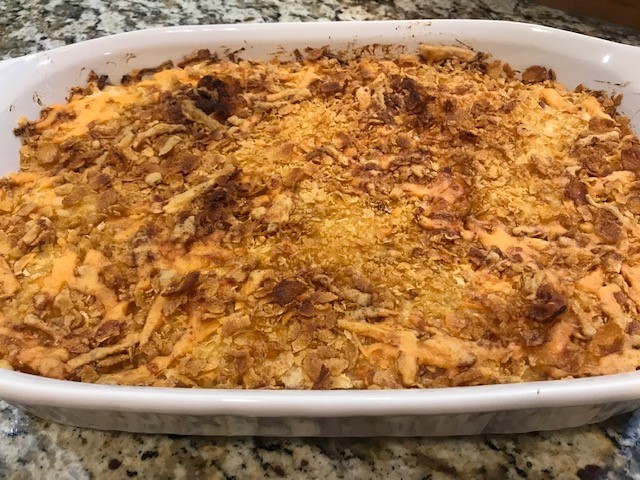
Utah Funeral Potato Casserole

Serves 8-10

  • 4 Tbs Unsalted Butter
  • 1 Small Yellow Onion, peeled and diced
  • 2 Cloves of garlic, peeled and diced
  • 1 30oz. Bag of Frozen Shredded Hash Brown Potatoes, slightly thawed
  • 1 10.5 oz. Can Condensed Cream of Chicken Soup
  • 1 Cup Sour Cream
  • 1/4 Cup Parmesan Cheese, grated
  • 1/2 tsp Salt
  • 1/2 tsp Freshly Ground Black Pepper
  • 2 Cup Sharp Cheddar Cheese, shredded
  • 1 1/2 Cup Corn Flake Cereal, lightly crushed

Step 1: Preheat the oven to 350 degrees.

Step 2: Place 2 Tbs of the butter in a large skillet over medium heat. Once the butter had melted, add the diced onion and cook, stirring occasionally, until the onions are soft, about 6 minutes. Add the garlic to the onions and cook, stirring frequently, for an additional 2 minutes. Remove from the heat.

Step 3: In a very large bowl mix together the cooked onions, cooked garlic, had brown potatoes, cream of chicken soup, sour cream, Parmesan cheese, salt, pepper, and 1 1/2 cups of the cheddar cheese until well combined.

Step 4: Spread this mixture evenly in a 9 x 13 casserole dish. Sprinkle the remaining cheddar cheese over the top and the spread the crushed corn flake cereal over the cheese.

Step 5: Take the remaining 2 Tbs of butter and melt it. Slowly pour the melted butter over the corn flakes.

Step 6: Place the casserole in the hot oven and bake until the corn flakes are golden brown and the casserole bubbles around the edges, about 1 hour.

Step 7: Serve hot.

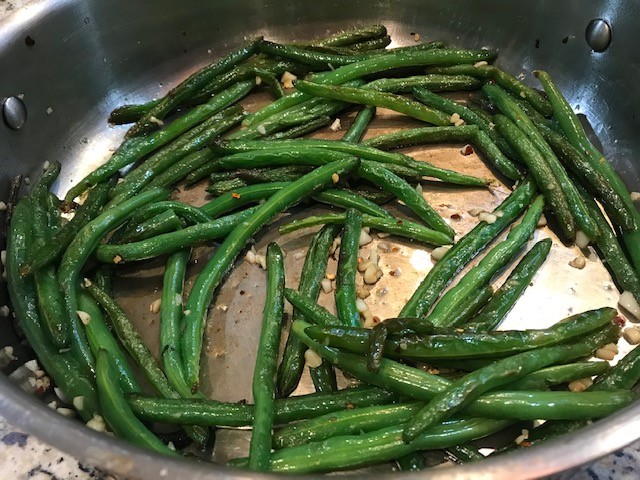
Spicy Green Beans

Serve 4

  • 2 Tbs Canola Oil
  • 1 lb. Green Beans, washed, trimmed, and dried
  • 3 Garlic Cloves, peeled and minced
  • 1/4 tsp Salt
  • Pinch Red Pepper Flakes

Step 1: Heat a large skillet with high sides over medium-high heat. Once hot, add the oil. When the oil starts to shimmer, gently swirl it to coat the bottom of the pan.

Step 2: Add the green beans to the hot oil and season with salt.

Step 3: Cook the beans for 5 minutes, shaking the pan and stirring constantly. The beans with blister and char.

Step 4: Remove the pan from the heat and add the garlic and red pepper flakes. Continue to cook, stirring constantly, for 2 minutes off the heat. (The oil is still very hot, so cooking off the heat allows the garlic to cook without burning.)

Step 5: Serve hot.

Fun Facts about Utah: 1. Utah is where you can find one of the heaviest organisms on earth. The Trembling Giant, or Pando, in the Fishlake National Forest, is made up of 47,000 genetically identical trees that share a single root system. In addition to being notably massive, it’s also among the oldest organisms on earth—it’s been alive for more than 80,000 years. 2. In 1869, the nation’s first transcontinental railroad was completed in Promontory, Utah. Construction on the project began in Sacramento to the west and in Omaha to the east and took seven years to build. 3. The Bonneville Salt Flats comprises 30,000 acres of desolate, densely packed salt pan. The spot’s incredibly flat and smooth terrain makes it a popular destination for speed-seeking land racers. In 1964, a man named Norman Craig Breedlove broke the record for longest continuous tire skid when he lost control of his jet-powered Spirit of America on the flats. The resulting skid marks stretched 6 miles long. 4. Utah is the only state where every county contains some part of a national forest. 5. Utahans eat twice the amount of lime green Jell-O as the rest of the population. A popular way to consume the sweet treat in Utah is to add shredded carrots to the mix. 6. When Jim Bridger became the first English-speaking person to discover the Great Salt Lake in 1824, he mistakenly thought he had reached the Pacific Ocean. The Great Salt Lake contains between 4.5 and 4.9 billion tons of dissolved salt. The parts of the lake with the highest salt content are nearly nine times saltier than the ocean.

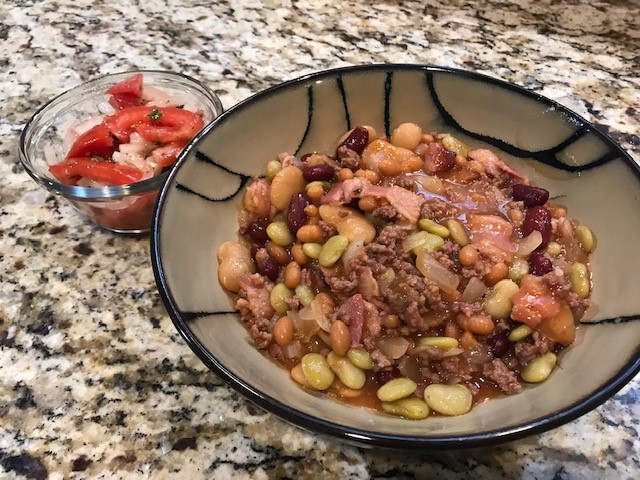
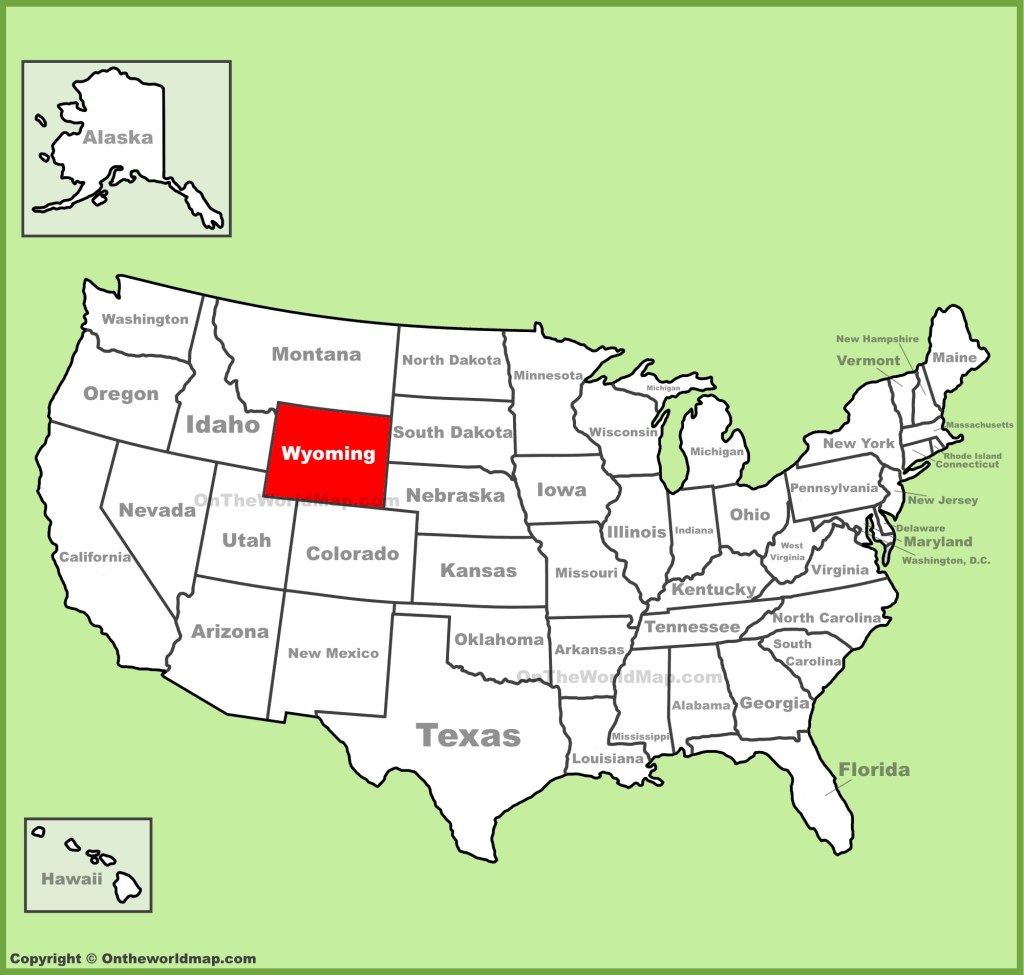
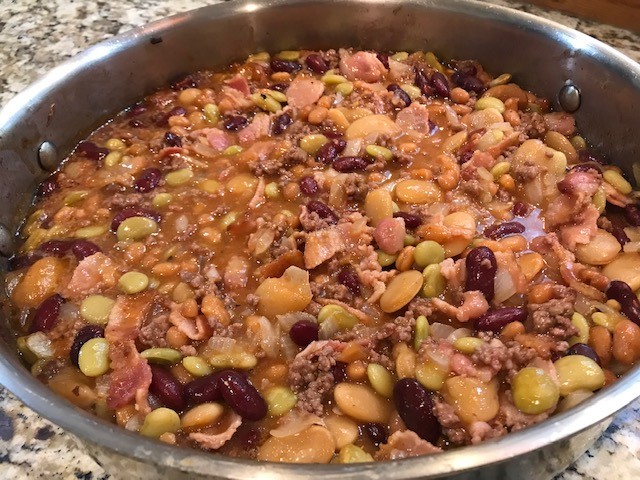
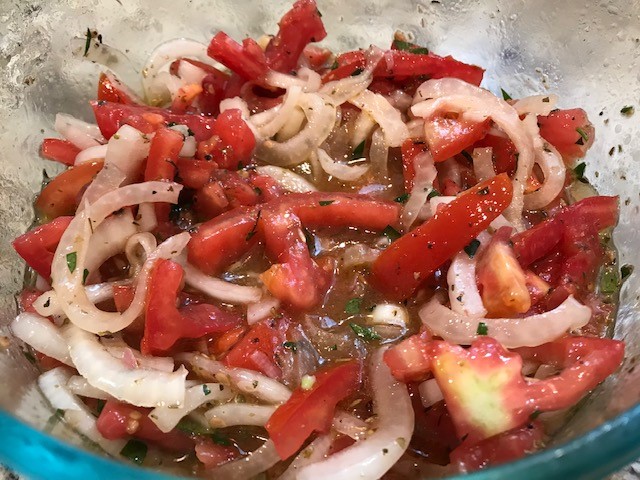
Trip #44 Wyoming (West) Roosevelt Beans, Marinated Tomato and Onion Salad

Wyoming’s Date of Statehood – July 10th, 1890

Wyoming is one of those romantic, wide-open spaces that calls to the wild spirit in all of us. Ok, maybe that’s just me. Wyoming IS home to one of the places on my bucket list though, Yellowstone National Park! Hot springs, geysers, canyons, and fresh air all around make this one of America’s most iconic destinations. It is also the home of our entrée recipe! The Roosevelt Lodge was built in 1919 near a site where Yellowstone enthusiast President Teddy Roosevelt once camped. It now serves as a restaurant and cabin complex for the park, and they hand out their famous beans recipe as a souvenir. So, we’ll get to enjoy a little of the Yellowstone spirit with a side of tomato and onion salad that is served pretty heavily by ranch cooks across the state! Sounds like an adventure to me!

Tips and Tricks

There are lots of different types of tomatoes. So, today’s Tips and Tricks section will be about what makes each different and the best uses for each one!

  • Cherry Tomatoes
    • Cherry tomatoes are round, bite-sized, and so juicy that they may pop when you bite into them. They’re the perfect size for salads or to eat alone as a snack. They’re also well suited for skewers and kebabs.
  • Grape Tomatoes
    • Grape tomatoes are about half the size of cherry tomatoes. They don’t contain as much water and have an oblong shape. Like cherry tomatoes, grape tomatoes are excellent in salads or eaten alone as a snack. However, they’re likely too small to use on skewers. If you don’t care for the juiciness of cherry tomatoes, the grape variety may be a better choice for you.
  • Roma Tomatoes
    • Roma tomatoes are larger than cherry and grape tomatoes but not large enough to be used for slicing. Romas are also known as plum tomatoes. They’re naturally sweet and juicy, making them a solid choice for canning or making sauces. They’re likewise popular in salads.
  • Beefsteak Tomatoes
    • Beefsteak tomatoes are large, sturdy, and firm enough to hold their shape when being thinly sliced. They’re perfect to slice up for sandwiches and hamburgers. They’re also mild in taste and juicy, making them a good choice for canning or sauce-making.
  • Heirloom Tomatoes
    • Heirloom tomatoes vary significantly in size and color — ranging from pale yellow to bright green to deep purplish-red. They’re non-hybrids, and their seeds are saved and passed down without cross-pollinating with other types. Some people view heirloom tomatoes as a more natural alternative to hybrid ones. Heirloom varieties also tend to have a deeper, sweeter taste than store-bought alternatives. They’re prized for their taste, so they’re perfect for canning, making sauces, and eating by themselves — lightly salted if that’s your preference.
  • Tomatoes on the Vine
    • Tomatoes on the vine are sold still attached to the vine they grew on. This prolongs their shelf life. They’re typically large and firm enough to be sliced for sandwiches, but they can also be used in canning and sauces.
  • Green Tomatoes
    • Green tomatoes can be divided into two types: heirlooms that are green when fully ripe and unripened ones that have not yet turned red. Perhaps surprisingly, unripened green tomatoes are used in cooking in some regions. For example, fried green tomatoes, which are sliced, battered with cornmeal, and fried, are popular in the Southeastern United States. They’re also excellent for canning and making sauces. They’re tangy and slightly sour, so they impart a unique flavor and color to dishes. One common use of green tomatoes is to make relish, a condiment for sandwiches and meats. However, unripe green tomatoes contain higher levels of alkaloids than ripe ones, which makes them more difficult to digest. They may cause gastrointestinal issues in some people, so they should not be eaten raw (9Trusted Source, 10Trusted Source).

Best Uses for Each Type

  • Sauces: Roma, heirloom, tomatoes on the vine
  • Canning: Roma, heirloom, tomatoes on the vine, green tomatoes
  • Salads: grape, cherry
  • Skewers: cherry
  • Sandwiches: beefsteak, tomatoes on the vine
  • Fried: green tomatoes
  • Snacks: grape, cherry, heirloom

Roosevelt Beans

Serves 6-8

  • 1 lb. Ground Beef
  • 1/2 lb. Bacon, diced
  • 1 White Onion, peeled and diced
  • 1 (16 oz.) Can Pork and Beans
  • 1 (15 oz.) Can Red Kidney Beans
  • 1 (15 oz.) Can Lima Beans, drained
  • 1 (15 oz. Can Butter Beans, drained
  • 1/2 Cup Light Brown Sugar
  • 1 Tbs Apple Cider Vinegar
  • 1 Tbs Spicy Brown Mustard
  • 1/2 Cup Ketchup
  • 1 tsp Garlic Powder
  • Salt and Pepper, to taste

Step 1: Preheat the oven to 350 degrees

Step 2: Place the bacon in a cold, oven-safe skillet with high sides. Place the skillet on the stove and set the temperature to medium. Cook the bacon, stirring occasionally, until the fat starts to render and the edges begin to brown slightly.

Step 2: Add the ground beef to the bacon and cook, stirring frequently, until the beef is half cooked through, about 3 minutes.

Step 3: Drain the fat from the skillet and return it to the heat. Add the diced onions and cook until the meat is browned and the onions start to soften, about 5 minutes.

Step 4: Add the pork and beans, kidney beans, lima beans, butter beans, brown sugar, apple cider vinegar, spicy brown mustard, ketchup, and garlic powder to the meat and stir to combine. Once the liquid start to simmer, remove from the stove top and place it in the hot oven.

Step 5: Bake, uncovered, for 45 minutes.

Step 6: Serve hot a main course or side dish.

Marinated Tomato and Onion Salad

Serves 3-4

  • 2 Large Tomatoes, quartered and sliced
  • 1 Large Sweet Onion, peeled, halved, and thin sliced
  • 1/4 Cup Olive Oil
  • 2 Tbs Red Wine Vinegar
  • 1 Handful Fresh Parsley, finely chopped
  • 1/4 tsp Salt
  • 1 tsp Italian Dressing
  • 1 Small Shallot, peeled and minced
  • 1/2 tsp Sugar
  • 1/4 tsp Garlic Powder
  • 1/4 tsp Freshly Ground Black Pepper

Step 1: In a medium bowl, whisk together the olive oil, red wine vinegar, parsley, salt, Italian seasoning, minced shallot, sugar, garlic powder, and black pepper until it is well combined and the sugar has dissolved.

Step 2: Place the sliced tomatoes and onion in a large bowl and pour the dressing over it. Toss the salad gently to combine.

Step 3: Cover and set aside in the refrigerator for 3 hours, stirring the salad every hour or so.

Step 4: Serve cold.

Fun Facts about Wyoming: 1. The Wyoming territory became first in the nation to grant women over the age of 21 the right to vote in 1869. 2. The country’s first female governor was also elected in Wyoming. After Nellie Tayloe Ross’s husband, Governor William Bradford Ross, passed away, she was elected to finish his term. She served as the 14th governor of the state from 1925 to 1927, and was later appointed by FDR to serve as the director of the United States Mint. 3. Wyoming is the least populous state in the country, even though it’s the 10th largest by area. 4. The outlaw Harry Alonzo Longabaugh, a.k.a. The Sundance Kid, took his nickname from the town of Sundance, Wyoming, where he was jailed at the age of 15 for stealing a horse. 5. Most of Yellowstone, the nation’s first National Park, lies within the borders of Wyoming. Established in 1872, 44 years before there was a National Park Service, the park hosts nearly 4 million visitors each year. 6. President Theodore Roosevelt declared Devils Tower the nation’s first National Monument.  7.  Two of the largest coal mines in the world are located in Wyoming: North Antelope Rochelle and Black Thunder, both in the Powder River Basin. Coal is big business in Wyoming, with about 40 percent of the country’s domestic supply coming out of the state’s mines.

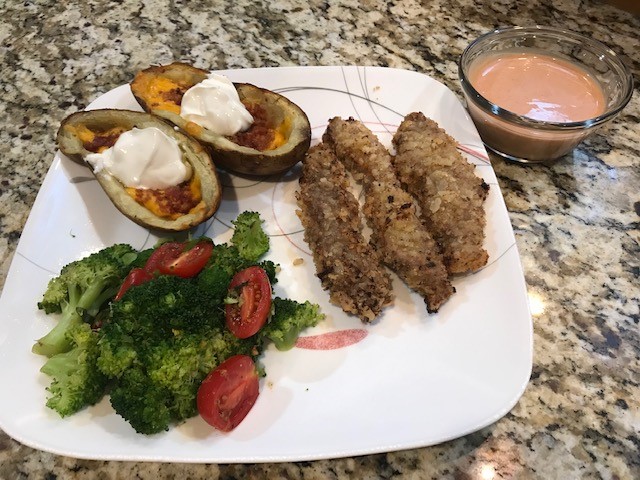
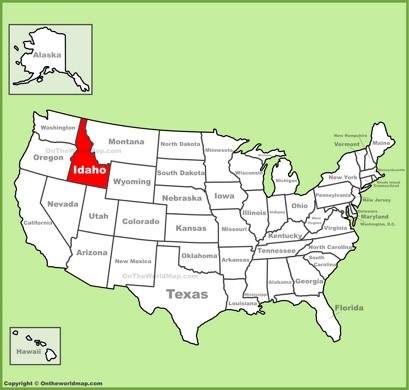
Trip #43 Idaho (West) Idaho Steak Fingers, Fry Sauce, Stuffed Potato Skins, Lemon-Basil Broccoli and Tomatoes

Idaho’s Date of Statehood – July 3rd, 1890

When you think about Idaho, what comes to mind? For me, it is a fluffy russet potato! And goodness knows that is because no one does marketing quite like the Idaho Potato Commission! Case in point, the Idaho Potato Commission created a 6-ton, 28 feet long, 12 feet wide, fiberglass potato that toured cross-country for 7 years. The BEST part is that after the spud retired from traveling, it was turned into am Air B&B hotel experience! Yep, you can SPEND THE NIGHT in a giant tater (https://www.airbnb.com/rooms/32011367.) Idaho…delicious!

Tips and Tricks

  1. To get the best, fluffiest baked potatoes, it is important that the potatoes are pierced SEVERAL times, all over, with a fork. The deeper the piercing, the better.
  2. When you are breading something to fry, the best method is the Wet-Hand/Dry-Hand method.
    • Set up a wet station (your egg wash) and a dry station (your breading)
    • Use 1 hand to dip the food is the egg wash, place the egged food in the dry station, use your OTHER hand to coat the food in breading.
    • Keeping your hands separate means that you won’t end up with a big mess!
    • I like using pie pans for the wet and dry stations
  3. When using your broiler, keep the oven door cracked and watch the food carefully. Food under the broiler can burn so quickly.

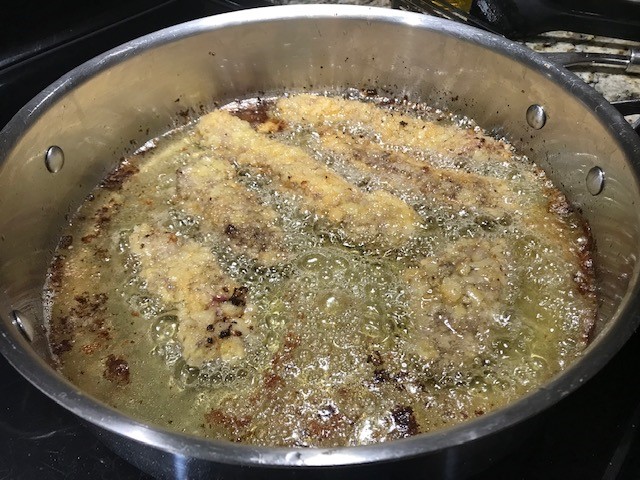
Idaho Steak Fingers

Serves 4

  • 1 lb. Cube Steak, cut into 1-inch wide strips
  • 1 Sleeve of Saltine Crackers, crushed into VERY small pieces
  • 4 Eggs, lightly beaten
  • 1/4 tsp Salt
  • 1/4 tsp Freshly Ground Black Pepper
  • Vegetable Oil, to fry

Step 1: Place a large pan with high sides over medium heat. Add enough vegetable oil to come 1 inch up the side of the pan. Heat the oil to 350 degrees.

Step 2: While the oil is heating, set up your wet station but placing the lightly beaten eggs in a pie pan and the dry station by placing the crushed saltine croakers in a sperate pie pan. Season both sides of the steak strips with salt and pepper.

Step 3: Using one hand, place a steak strip in the beaten egg, coat the steak in the egg wash, and place the strip in the crackers. Using your OTHER hand, roll the strip in the cracker mixture. Place the breaded steak strip aside and repeat the process with the remaining steak pieces.

Step 4: Once the oil is hot and the steak has been breaded, gently place the steak strips in the hot oil. Don’t crowd the pan and work in batches, as necessary. Fry for 2 1/2 minutes, adjusting the stove temperature to maintain the oil temperature at 350 degrees. After 2 1/2 minutes, flip the steaks and fry for an additional 2 1/2 minutes.

Step 5: Once the steak is lightly golden brown and cooked through, remove the strips from the oil and allow to drain on a wire rack that has been set over paper towels.

Step 6: Fry all the meat until cooked and serve hot.

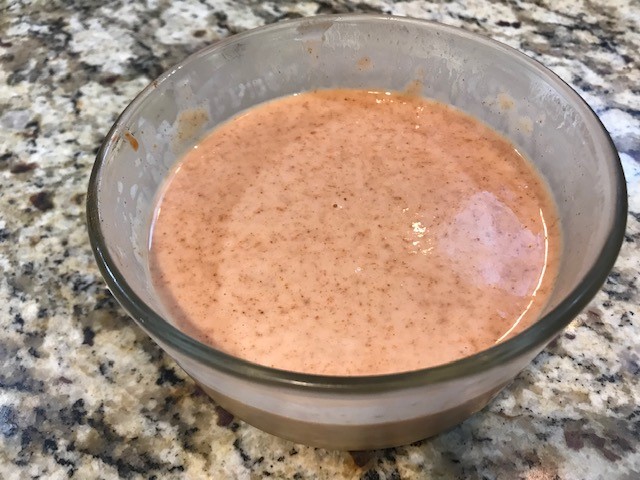
Fry Sauce

Serves 4

  • 1/2 Cup Mayonnaise
  • 1/8 Cup Sugar
  • 1/4 tsp Salt
  • 1 Pinch Paprika
  • 1/8 tsp Ground Mustard
  • 1/4 tsp Onion Powder
  • 1/4 Cup Ketchup
  • 1 Tbs Red Wine Vinegar
  • 3/4 tsp Worcestershire Sauce

Step 1: In a medium bowl, whisk together the mayonnaise, sugar, salt, paprika, ground mustard, and onion powder until everything is incorporated and smooth.

Step 2: Once smooth, add the ketchup, vinegar, and Worcestershire sauce until well blended.

Step 3: Cover and set aside in the refrigerator until chilled, at least 1 hour.

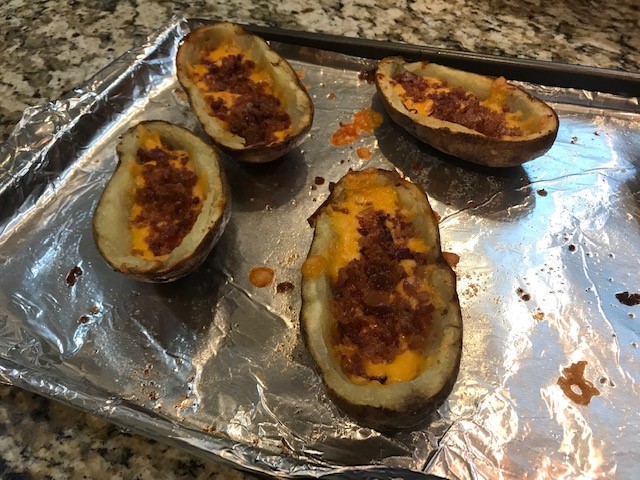
Stuffed Potato Skins

Serves 2

  • 2 Medium Idaho Russet Potatoes, scrubbed
  • 4 Tbs Real Bacon Bits
  • 1 Cup Grated Sharp Cheddar Cheese, shredded
  • 4 Tbs Sour Cream
  • 2 Tbs Butter, Melted
  • Salt and Pepper, to taste

Step 1: Preheat the oven to 400 degrees.

Step 2: Take your scrubbed potatoes and pierce them with a fork several times, all over.

Step 3: Once the oven is hot, place the potatoes directly onto the rack and bake for 50-60 minutes, or until a knife can easily pierce them. Once baked, remove from the oven and allow to cool for about 10 minutes, or until they are cool enough to handle.

Step 4: Set the oven to broil, on low.

Step 5: Once cooled, slice the potatoes in half, lengthwise. Using a spoon, scoop out most of the flesh, leaving about 1/4 inch intact around the outside. Brush the insides and outsides of the potatoes with melted butter. Season the potatoes with salt and pepper, as desired.

Step 6: Place the potatoes on a broiler safe baking sheet, skin side up. Place the potatoes under the broiler and cook until the butter foams and the skins start to get crispy, 3-4 minutes.

Step 7: Flip the potatoes over so the flesh side is up. Place these back under the broiler and broil until the top edges start to brown, another 3-4 minutes. Keep a close watch on the potatoes to prevent them from burning.

Step 8: Remove the baking sheet from the oven. Stuff each potato skin with 1 Tbs Bacon bits and 1/4 cup shredded cheddar cheese. Put the potatoes back under the broiler and cook until the cheese is melted and bubbling, 5-6 minutes.

Step 9: Remove from the oven, top each potato skin with 1 Tbs sour cream, and serve immediately.

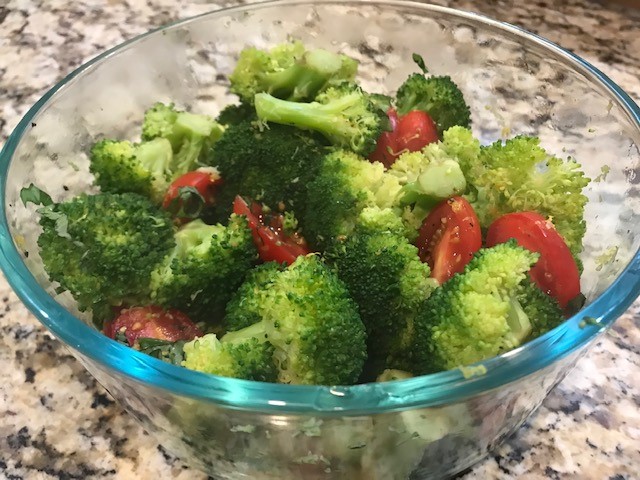
Lemon-Basil Broccoli and Tomatoes

Serves 4

  • 1 lb. Broccoli Florets
  • 2 Tbs Water
  • 1/4 tsp Salt
  • 1/4 tsp Freshly Ground Black Pepper
  • 10-12 Grape Tomatoes, halved
  • 1 Handful Fresh Basil, chopped

Step 1: Place the broccoli and 2 Tbs of water in a microwave-safe bowl. Cover and microwave on high for 3-4 minutes, or until the broccoli is just tender.

Step 2: Once cooked, drain the broccoli of the cooking water. Add the halved tomatoes, salt, pepper, and basil to the broccoli and mix gently until well-combined.

Step 3: Serve warm.

Fun Facts about Idaho: 1. Idaho’s known for its potatoes, but its official nickname is the Gem State. Some 72 different precious and semi-precious gemstones have been found there. 2. Idaho also supplies the majority of the nation’s trout. 3. At 7,993 feet deep, Hells Canyon in western Idaho is the deepest river gorge in North America. In comparison, the Grand Canyon is only 6,000 feet deep. 4. Idaho’s State Capitol Building is the only one in the U.S. heated by geothermal energy. The heat comes from hot springs located 3,000 feet underground. 5. Idaho drinks more wine per person than any other state in the country.

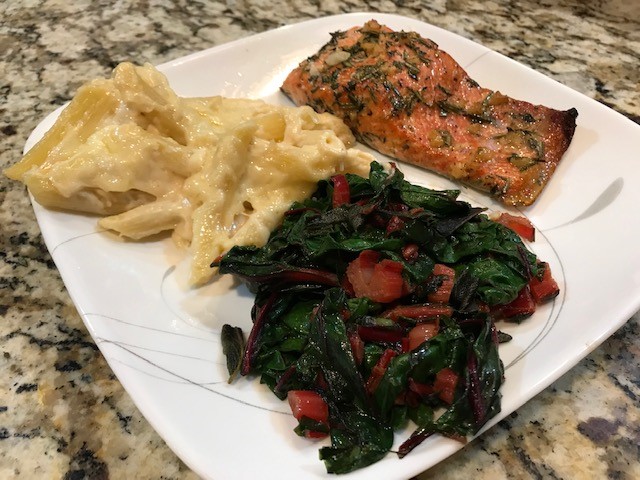
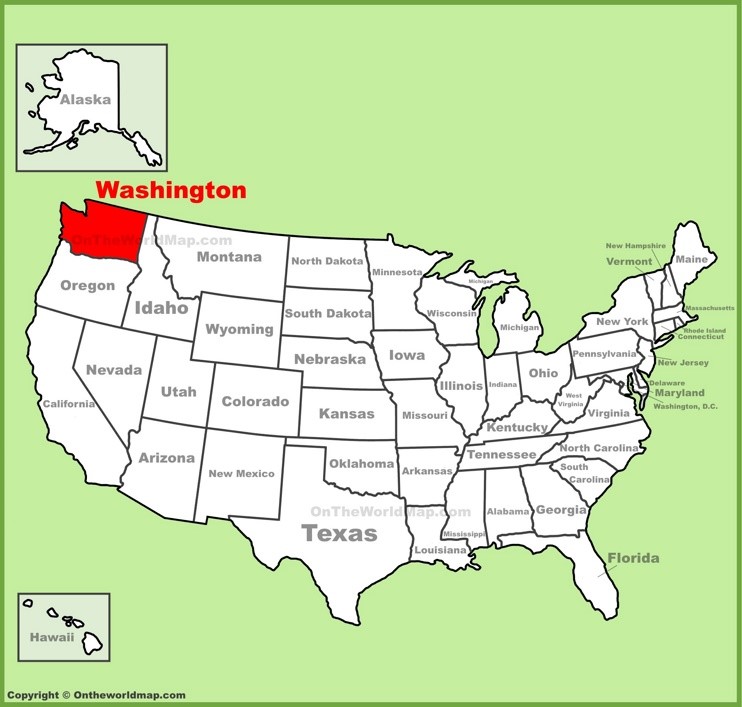
Trip #42 Washington (West) Cedar Plank Salmon with Lemon, Garlic, and Herbs, Beecher’s “World’s Best” Macaroni and Cheese, Rainbow Chard with Sage Brown Butter

Washington’s Date of Statehood – November 11th, 1889

The Pacific Northwest is GORGEOUS. There are soaring mountains, the deep blue of the Pacific Ocean, and everything is so green. I’ve only been to Washington once, but I remember it having some of the best food I’ve had anywhere! Whether it is the abundant seafood, the bountiful vegetables, or the delicious variety at the Pike Place market in Seattle, the cuisine of Washington has a special place in my heart.

Tips and Tricks

There are 6 Main varieties of Salmon

  1. King (Chinook)
    • Chinook are the most widespread Salmon in North America. They show up all the way from the deep Pacific waters of southern California to the ice-cold rivers of northern Alaska.
    • Rich and buttery, King salmon is the highest in fat and omega-3 fatty acids.
    • Due to its large size (average King salmon weighs about 40lbs, and some are even over 100lbs!), it comes in thick filets! And since they’re rare species, they’re quite expensive.
  2. Sockeye Salmon (Red)
    • Sockeye Salmon live from Washington up along the Western Seaboard to Alaska. They also live in all the Great Lakes except Superior. On top of that, landlocked “Kokanee Salmon” are stocked in lakes around the US and Canada.
    • Sockeye salmon are slimmest salmon, therefore they have lower fat content than King and Coho salmon.
    • And it has the most salmon-y flavor (fishy, in the best way!). Due to its unique diet, there’s no farmed version of Sockeye. Plus, it’s more affordable than King and Coho salmon, which makes it the most popular choice among salmon lovers!
  3. Coho Salmon (Silver)
    • They show up everywhere else you can find Chinook: the whole northern Pacific coast and all five Great Lakes.
    • Coho salmon have delicate texture and subtle flavor.
    • This type of salmon has moderate amount of fat, but it’s still rich in omega-3 fatty acids.
  4. Pink Salmon (Humpback)
    • Pink Salmon are unique in that they only show up every other year. In Washington and BC, they spawn on years that end in an odd number. On even years, they head up to Alaska instead. You really need to time your trip to catch these little guys – or head to the Great Lakes, where you can find them year in, year out.
    • These pale pink colored, small salmon are mild in taste and low in fat.
    • They’re mostly processed into cans, but they’re also available frozen.
  5. Chum Salmon (Dog) 
    • Chum Salmon have the same native range as most Pacific Salmon: They start to show up in the northwestern mainland US and live all the way along Canada’s Pacific coast and up to the Gulf of Alaska. However, unlike other species, they were never introduced into the Great Lakes.
    • Chum salmon is also small, low fat salmon. They’re the most popular for their egg roe, those beautiful bright orange balls served with sushi! If you’ve ever had ikura sushi, then you’ve tasted a part of chum salmon.
  6. Atlantic
    • All Atlantic salmon on the market is farmed salmon, because wild Atlantic salmon are now rare species.

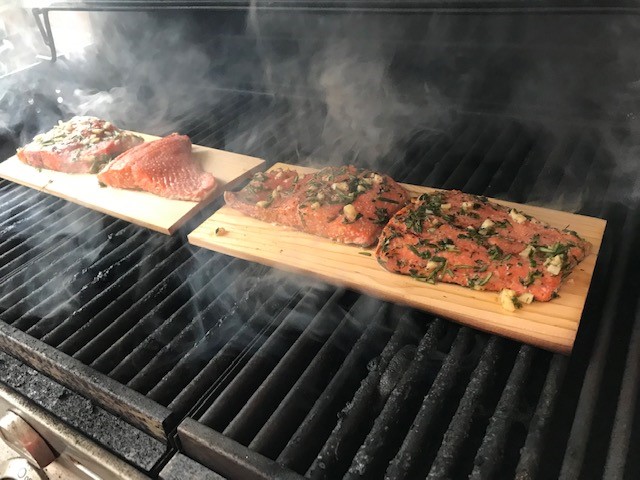
Cedar Plank Salmon with Lemon, Garlic, and Herbs

Serves 4

  • 2 Large Cedar Planks, soaked in clean water for at least 1 hour
  • 4 Salmon Fillets (6 oz. each)
  • 1/4 Cup Olive Oil
  • 1/2 tsp Salt
  • 1/2 tsp Freshly Ground Black Pepper
  • Zest from 2 Lemons
  • 1 1/2 tsp Fresh Rosemary, leaves only and roughly chopped
  • 1 1/2 tsp Fresh Thyme, leaves only and roughly chopped
  • 2 Large Garlic Cloves, peeled and minced

Step 1: Place the salmon fillets in a large zip-tip bag. Add the olive oil, salt, pepper, lemon zest, fresh rosemary, fresh thyme, and minced garlic to the salmon. Seal the bag and gently manipulate the bag so that the fish was evenly coated in the oil and seasonings. Set the fish aside in the refrigerator for at least 30 minutes (and up to 4 hours.)

Step 2: Preheat the grill to medium-high. Once the grill is hot and the fish has marinated, take the cedar planks out of the water. Pat them dry.

Step 3: Place the fish, skin-side down, on the cedar planks and then place the planks directly on the hot grill. Shut the lid and grill for 12-15 minutes, or until salmon is done to the temperature you prefer.

Step 4: Remove the fish from the wooden plank and serve hot.

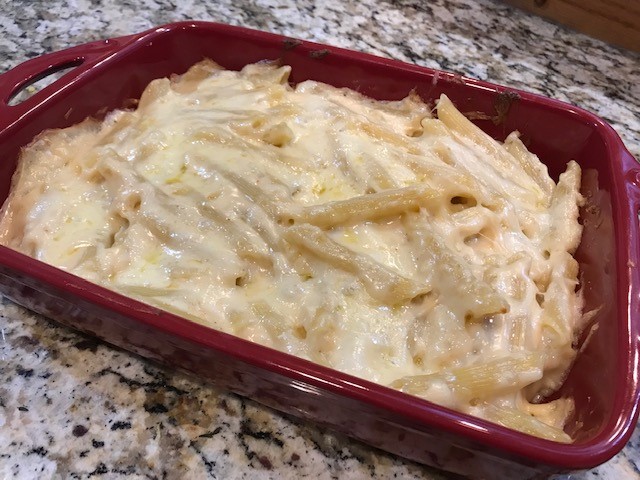
Beecher’s “World’s Best” Macaroni and Cheese

Sevres 4-6

  • 8 oz. Penne Pasta
  • 2 Cups (about 8 oz.) Beecher’s Flagship Cheddar Cheese, grated
  • 1 1/2 Cups Whole Milk
  • 2 Tbs plus 2 tsp All-Purpose Flour
  • 2 Tbs Unsalted Butter
  • 1/2 Cup Just Jack (Monterrey Jack) Cheese, grated
  • 1/4 tsp Salt
  • Pinch Chili Powder
  • Pinch Garlic Powder

Step 1: Preheat the oven to 350 degrees.

Step 2: Prepare the penne pasta per the package directions EXCEPT cook the pasta for 2 minutes less than advised. Once the pasta is mostly cooked, drain, rinse with cold water, and set aside.

Step 3: Place a medium saucepan over medium heat. Add the 2 Tbs of unsalted butter and allow to melt. Once melted, whisk in the flour. Once thoroughly combined, cook the butter and flour mixture, constantly stirring, for 2 minutes.

Step 4: Add the milk very slowly, while whisking. Once all of the milk has been added, cook for an additional 10 minutes, whisking nearly constantly. The mixture will be very thick. Remove from the heat.

Step 5: Add in 1 3/4 Cups Flagship cheese, 1/4 Cup Monterrey Jack Cheese, salt, chili powder, and garlic powder. Stir until the cheese is melted and fully incorporated.

Step 6: Add the cooked and drained pasta to the cheese sauce and gently fold the noodles in. Once everything is carefully mixed, scrape the pasta and cheese sauce into am 8-inch baking dish. Spread the remaining cheese evenly over the top.

Step 7: Place the baking dish in the hot oven and bake, uncovered, for 20 minutes.

Step 8: Once baked, remove from the oven and allow to sit for 5 minutes before serving.

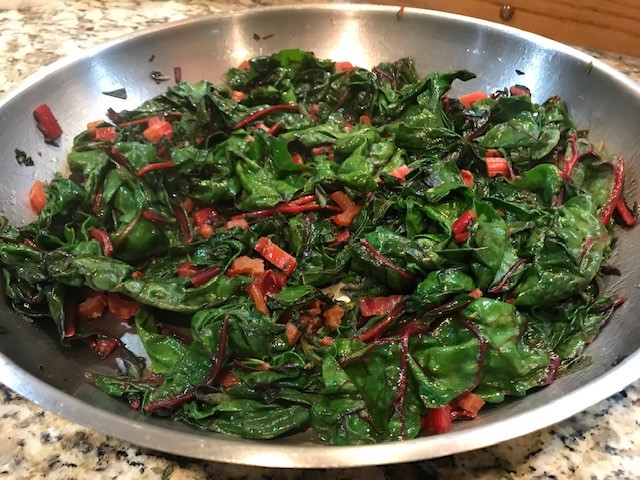
Rainbow Chard with Sage Brown Butter

Serves 4

  • 2 Small Bunches of Rainbow Chard, rinsed
  • 1/4 Cup Unsalted Butter
  • 1 Handful (about 2 Tbs) Fresh Sage Leaves, roughly chopped
  • Salt and Freshly Ground Pepper, to taste

Step 1: Prepare the chard by cutting the ends off of the stalks and separating the leaves from the stalks. Roughly chop the leaves into 2-3-inch pieces and slice the stalks thinly, like celery.

Step 2: Place a large skillet over medium heat. Once the pan is hot, add the butter and allow it to melt. Once melted, continue to cook the butter until the solids turn a medium brown and start to smell nutty, about 3 minutes.

Step 3: Once the butter is a light brown, add the sage and cook for 30 seconds, stirring constantly.

Step 4: Add the sliced chard stalks and cook until just tender, about 3 minutes.

Step 5: Add 1/3 of the chard leaves and cook, stirring constantly, for 1-2 minutes or until mostly wilted. Then, add the next third of the leaves and cook for 1- 2 minutes. Finally, add the last 1/3 of the chard leaves and cook until the leaves are wilted.

Step 6: Season with salt and pepper, as desired, and serve.

Fun Facts about Washington: 1. Mount St. Helen’s lost 1,131 feet of elevation in the May 1980 eruption and spewed forth about one cubic mile of dust, ash, and debris. The blast leveled over four billion feet of usable timber, enough to build 150,000 homes. 2. Everett, Washington is the site of the world’s largest building by volume, Boeing’s final assembly plant. 3. Despite New York coining the nickname “The Big Apple”, Washington is the state which produces the most apples out of all 50! They also produce the most pears, red raspberries, sweet cherries, and spearmint oil. 4. Washington is the birthplace of both Jimi Hendrix (Seattle) and Bing Crosby (Tacoma). 5. The world’s first soft-serve ice cream machine was located in an Olympia Dairy Queen.

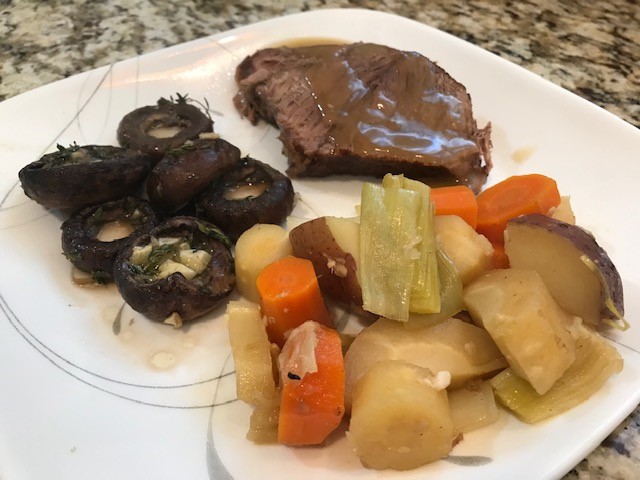
Trip #41 Montana (West) North Woods Beef Pot Roast, Baked Mushrooms with Butter and Thyme

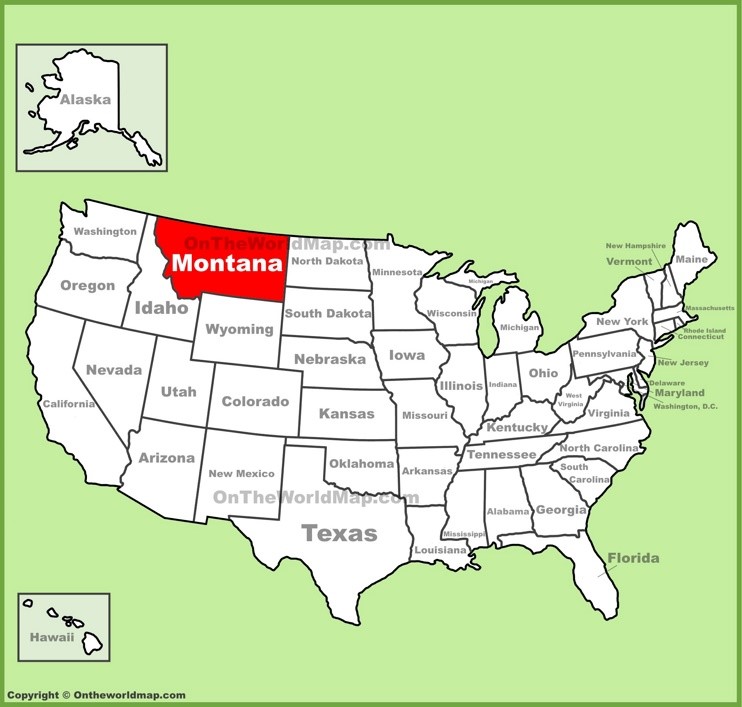
Montana’s Date of Statehood – November 8th, 1889

When I think of Montana, I think of wide-open spaces and cowboys on horseback. And, aside from baked beans, you can’t think of cowboys without thinking of beef! This meal of beef slow cooked with lots of root vegetables makes a hearty but not heavy supper, along with a side of deliciously herby mushrooms to cut the richness of the meat. All you need is a metal plate and clear view of the stars to feel like you’re at home, on the range!

Tips and Tricks

  1. Leeks grow in layers which often trap bits of grit and sand. So, in order to clean a leek, cut it in half lengthwise and fan the layers apart under running water. This will flush the grit out from between the layers.
  2. Here is how to clean and store Mushrooms:
    • Before use, refrigerate mushrooms in a loose brown paper bag or cardboard box. Avoid plastic wrap at all costs.
    • To clean mushrooms, simply wipe the dirt off. Never, ever, ever rinse them under water.
      • Because mushrooms have a high water content and are very absorptive, rinsing them can cause them to become waterlogged and result in a slimy, flavorless final product.
    • Slicing, dicing, and quartering are the most common ways to prep mushrooms, though you can also cook them whole.
      • To determine how you should cut your mushrooms, take into consideration what will work best in the recipe you’re making. If you’re whipping up a salad, sliced or quartered mushrooms both work well. If you’re making a soup, you’ll want to dice them into small even bits so you get the same amount of mushroom in every bite. If you’re going to grill them, consider leaving them whole (this method works especially well with big, juicy portabellas). You can also grind them up to make vegetarian meatballs—they have an uncanny meat-like texture.
    • And don’t throw away those stems!
      • When it comes to mushrooms with delicate stems, like cremini or button, you can actually slice up the stems and add them to your food the same way you would with the caps.

North Woods Beef Pot Roast

4-6 Servings

  • 2 Lbs. Beef Shoulder Roast
  • 1 Tbs Vegetable Oil
  • 1/2 Tsp Salt
  • 1 Lbs. Small Red-Skinned Potatoes, scrubbed and halved
  • 4 Large Carrots, peeled and chopped into large pieces
  • 2 Large Parsnips, peeled and chopped into large pieces
  • 1 Leek, root removed, cut in half length-wise, and the white and pale green parts chopped into large pieces
  • 1 Can Beef Broth
  • 4 Large Garlic Cloves, peeled and minced
  • 4 Tbs Cold Water
  • 2 Tbs Cornstarch

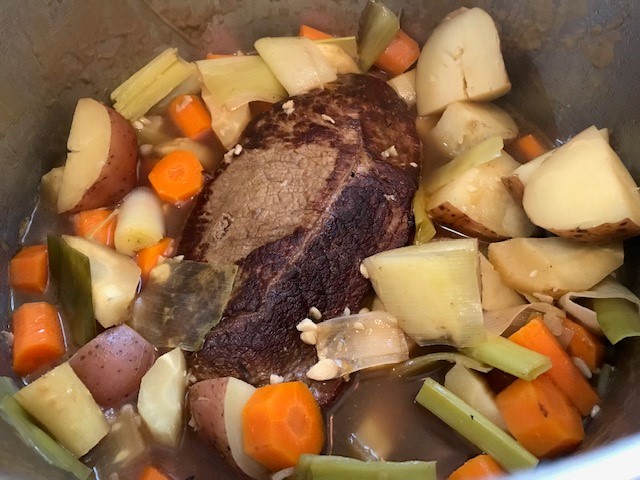
Step 1: Place a large pot over medium heat. Season the beef evenly with the salt. Once the pot is hot, add the vegetable oil. When the oil starts to shimmer, carefully add the roast and brown on each side for about 5 minutes.

Step 2: Once the roast is deep brown on all sides, add the beef stock and garlic cloves. Bring the stock to a boil, reduce the heat to low, cover, and cook for 2 hours.

Step 3: After 2 hours, add the vegetables (potatoes, parsnips, carrots, and leek.) Cover and cook for another 30-45 minutes.

Step 4: Once the vegetables are tender, remove the pot from the heat. Take 2 cups of the beef cooking liquid and place it in a small saucepan over medium heat. If you do not have 2 cups of cooking liquid, add enough water to make the correct amount. While the liquid is heating, whisk together the cold water and corn starch in a small bowl until it is thoroughly combined. Pour the cornstarch liquid into the beef broth and stir to combine. Bring to a boil and cook, stirring constantly, until the gravy is thickened, about 2 minutes.

Step 5: Carve the roast into slices and serve the beef with the vegetables and gravy on the side.

Baked Mushrooms with Butter and Thyme

Serve 4

  • 1 Lb. Baby Portobello Mushrooms, cleaned
  • 3 Garlic Cloves, peeled and minced
  • 1/4 tsp Salt
  • 2 Tbs Fresh Thyme Leaves, roughly chopped
  • 3 Tbs Butter, Melted

Step 1: Preheat the oven to 350 degrees.

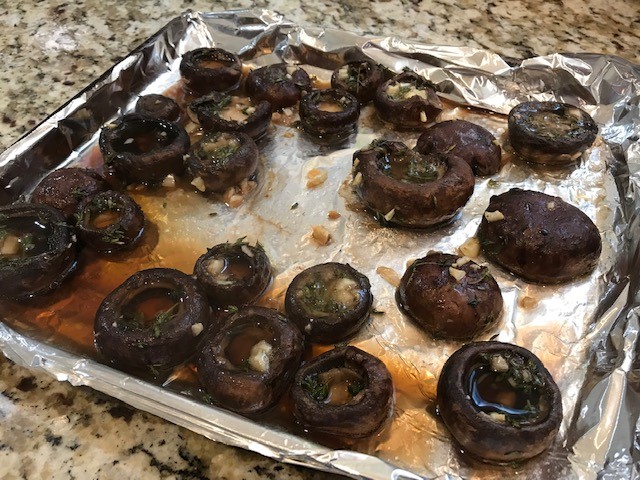
Step 2: Place the cleared, whole mushrooms in a large, zip-top bag. Add the remaining ingredients (garlic, salt, thyme, and melted butter,) to the mushrooms and gently manipulate the bag to get everything evenly coated.

Step 3: Empty the contents of the bag onto a baking sheet and spread the mushrooms out to give them each as much room as possible.

Step 4: Bake for 20 minutes or until the mushrooms are tender.

Step 5: Serve warm.

Fun Facts about Montana: 1. Montana is the only state in the U.S. with a Triple Divide, which allows waters to flow to Hudson Bay, the Atlantic Ocean, and the Pacific Ocean. 2. Montana has more different species of mammals than any other state in the U.S. There are approximately 100 species of mammals, including elk, bighorn sheep, caribou, and bobcats. 3. The North Entrance of Yellowstone National Park, located at Gardiner, is the original entrance to the world’s first National Park when it opened. 4. The largest observed snowflake fell during a storm in 1887 in Montana. It was measured at 15 inches wide. 5. “Tufts-Love Rex,” a giant Tyrannosaurus skeleton, was found in 2016 in Hell Creek, Montana. It is one of only 15 virtually intact T. Rex skeletons and one of the largest ever found. 6. Jeannette Rankin from Missoula was the first woman elected to the U.S. Congress in 1916. 7. Montana holds the world record for the greatest temperature change in 24 hours. On January 14-15, 1972, the temperature went from -54°F to 49°F. That is a difference of 103 degrees!

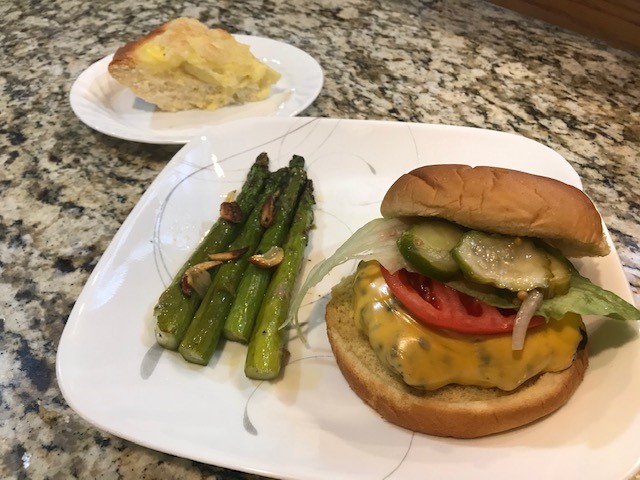
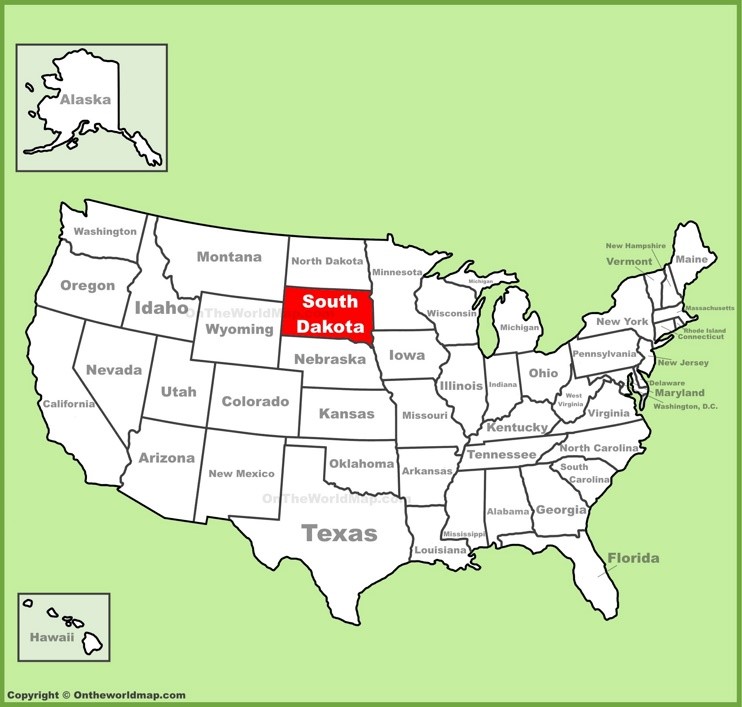
Trip #40 South Dakota (Midwest) Bison Cheeseburger, Garlic Roasted Asparagus, South Dakota Apple Kuchen

South Dakota’s Date of Statehood – November 2nd, 1889

There is nothing more American than a cheeseburger, except maybe a cheeseburger made from Bison! This uniquely North American animal is a delicious, lean source of protein for your cookouts! Add on some fresh asparagus and South Dakota’s own state dessert, a kuchen (which is German for cake but is more like a coffee cake or Danish,) and you have a yummy taste of the South Dakota wilds!

Tips and Tricks

  1. When making your burger patty, press your thumb into the center, leaving an indention. This will help the meat stay a disc instead of becoming a ball when the meat starts to contract during cooking.
  2. If you are trying to limit your beef consumption, there are several non-beef burger alternatives:
    • Turkey Burgers
      • Turkey burgers are one of the most popular and flavorful non-beef burger options. Cook it like a regular burger by adding spices, sauces, and toppings to make it taste like a real burger. Plus, turkey burger meat can be purchased pre-ground to save time when preparing tasty burgers.
      • Turkey offers these health benefits:
        • Good source of protein
        • Rich in vitamin B6
        • Low fat content
    • Salmon Burgers
      • Salmon is one of the most nutritionally well-rounded burger alternatives available. Salmon offers a variety of health benefits if you are maintaining a low fat diet. You can enjoy salmon burgers as a fillet or combine shredded salmon with vegetables, aiolis, and flavorful spices.
      • Here are some benefits that salmon provides:
        • Fights inflammation with omega-3 fatty acids
        • Promotes cardiovascular health
        • Supports healthy blood pressure with potassium
    • Bison Burgers
      • Bison burgers are beginning to sky-rocket in popularity due to their lean meat. Bison meat promotes better heart health and provides essential vitamins and minerals like iron and zinc. Bison burgers can be cooked like any regular beef burger and topped with lettuce, tomato, mayo, ketchup, mustard, or any other toppings of your choosing.
      • Learn more about the benefits of bison meat:
        • High protein content
        • Contains less fat and calories
        • Provides Omega 3 fatty acids
    • Chicken Burgers
      • This lean and low-fat protein is an excellent alternative to beef. When purchasing chicken for burgers, do not buy pre-ground chicken. Instead, choose boneless, skinless chicken breasts and use your own meat grinder for better texture.
      • Chicken has the following health benefits:
        • Contains cholesterol-reducing vitamins
        • Supports bones and teeth with phosphorus
        • High protein content
    • Pork Burgers
      • Pork is a great source of protein, and it is particularly well suited for pairing with sweet and tangy flavors. Try grilling pork burgers and topping them with barbecue sauce or Asian sauces like hoisin and teriyaki.
      • Here are some benefits of pork:
        • Supports immune system with zinc vitamins
        • Great source of iron
        • Promotes brain function with B12 vitamins

Bison Cheeseburger

Serves 4

  • 1 lb. Ground Bison
  • 4 Slices of Yellow American Cheese
  • Salt and Pepper, to taste
  • 4 Hamburger Buns
  • Lettuce, Tomato, Pickles, Mayonnaise, Ketchup, Mustard, Onions, as desired.

Step 1: Oil the grates of your grill lightly with vegetable oil. Heat the grill to High.

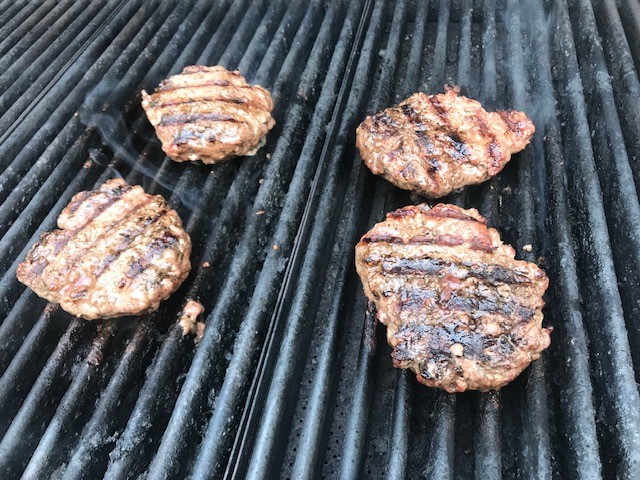
Step 2: Once the grill is lit and is heating up, divide the ground bison into 4 equal portions. Shape each portion into a patty that is approximately 1/2-inch thick. Press your thumb into the center of each patty so the burger will keep its shape on the grill. Sprinkle each side of salt and pepper, as desired.

Step 3: Once the grill is hot, add the burgers to grill, close the lid, and grill for 5 minutes.

Step 4: After 5 minutes, flip the burger, close the lid, and grill for 4 minutes.

Step 5: After 4 minutes, lift the lid, add the cheese to each burger, close the lid, and grill for 1 more minute. These will be medium-rare to medium.

Step 6: Once the burgers have reached at least 160 degrees, remove them from the grill, place them on the buns, and top as you wish.

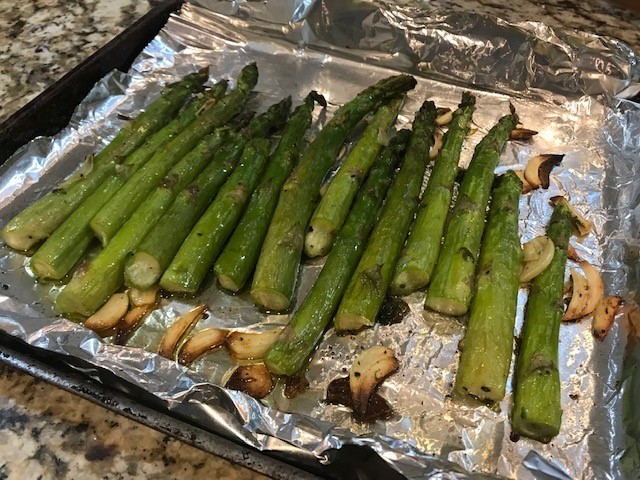
Garlic Roasted Asparagus

Serves 4

  • 1 Bunch Fresh Asparagus, rinsed and the woody ends snapped off
  • 3 Large Cloves of Garlic, peeled and thinly sliced
  • 2 Tbs Olive Oil
  • 1/4 tsp Salt
  • 1/4 tsp Freshly Ground Pepper

Step 1: Preheat the oven to 450 degrees.

Step 2: Place the cleaned and prepared asparagus spears into a large zip-top bag. Add the olive oil, garlic slices, salt, and pepper to the asparagus. Close the bag and gently manipulate the contents until the asparagus is thoroughly coated in oil and seasonings.

Step 3: Arrange the asparagus on a baking sheet and pour the oil and garlic over the spears.

Step 4: Place in the hot oven and bake for 10-15 minutes, turning the asparagus halfway through the cooking time.

Step 5: Serve hot.

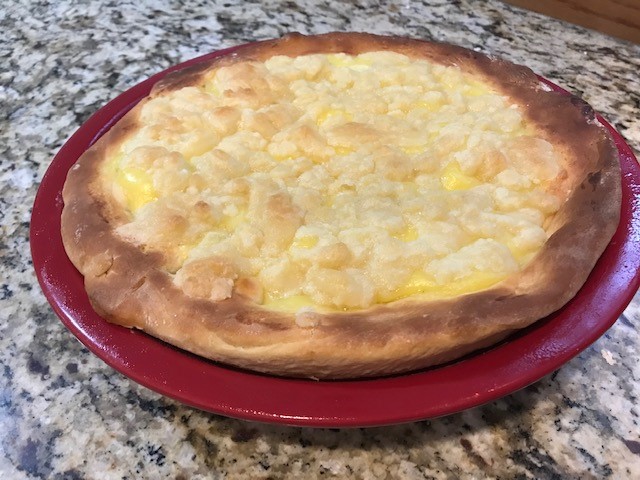
South Dakota Apple Kuchen

Serves 8

Crust

  • 1 Package Rapid Rise Instant Yeats
  • 1/8 Cup Lukewarm Water
  • 1 Egg, beaten
  • 3/4 Cup Milk
  • 1/2 Cup Sugar
  • 1/2 tsp Salt
  • 1/8 Cup Vegetable Oil
  • 3 1/4 Cups All-purpose Flour
  • 1 Granny Smith Apples, peeled, cored, and thinly sliced

Filling

  • 1 Egg
  • 1/4 Cup Sugar
  • 1/2 Cup Heavy Whipping Cream
  • 1/2 Cup Milk
  • 1 1/2 tsp All-Purpose Flour

Topping

  • 1/4 Sugar
  • 1/4 Cup Flour
  • 2 Tbs Margarine Melted

Make the Crust

Step 1: In a large bowl, whisk together the 1/8 cup of lukewarm water, yeast, and a pinch of flour. Set the yeast aside for 10 minutes or until the yeast starts to foam.

Step 2: In a medium saucepan, bring the milk to just a boil over medium-high heat. Once small bubbles appear and there is a film on top of the milk, remove it from the heat.

Step 3: Add the 1/2 Cup sugar, 1/2 tsp salt, and 1/8 cup of vegetable oil to the hot milk and whisk together until the sugar is fully dissolved. Then, add the beaten egg and stir to thoroughly combine. Set this aside until the temperature drops to 115 degrees.

Step 4: Once the milk mixture drop in temperature to 115 degrees, add it to the yeast. Add the flour and mix until a soft dough is formed.

Step 5: Place the dough in a large bowl and cover tightly with plastic wrap. Allow the dough to rise in a dark, warm place for 1 hour, or until doubled in size.

Step 6: Once the dough has risen, divide it into 2 equal portions. Take 1 portion of dough and freeze it for later. Grease a deep-dish pie pan. Take the other portion of dough and roll it out into a 1/4-inch thick circle so that it covers the bottom and most of the side of the pie pan. Set this aside in a warm, dark place for 15 minutes. Meanwhile, preheat the oven to 350 degrees.

Make the Filling

Step 7: In a medium saucepan, combine the heavy cream and milk. Heat the diary on medium heat until the liquid just starts to bubble and then remove it from the heat.

Step 8: In a medium bowl, mix the sugar, flour, and egg together. Slowly pour in the hot milk, whisking as your pour. Once everything is combined, pour the mixture pack into the saucepan and return it to medium heat.

Step 9: Cook the custard, stirring constantly, until the mixture is quite thick, about 3 minutes. Remove the pan from, the heat and set aside.

Make the Topping

Step 10: In a large bowl, whisk together the flour and sugar. Then, pour the melted butter into the dry ingredients and mix until thoroughly combined. Set aside.

Step 11: Once the dough has risen for 15 minutes in the pie pan, it is time to put the kuchen together. Place the thinly sliced apples directly onto the dough in a single layer and press them gently down.

Step 12: Take 1 cup of the custard filling and pour it over the apples. Use a rubber spatula to spread this out evenly.

Step 13: Take the topping, which will have the consistency of wet playdough, and pinch off little pieces and dot the top of the kuchen, covering as much of the custard as possible.

Step 14: Once assembled, place the kuchen in the hot oven and bake for 40 minutes or until the custard is set and the topping is a golden brown. Check about halfway through the cooking time to see if the edges are turning a dark brown. If so, cover the edges of the kuchen with foil to prevent burning.

Step 15: Once baked, allow the kuchen to cool completely before cutting and serving.

Fun Facts about South Dakota: 1. South Dakota Has More Shoreline Than Florida. Winding rivers with crystal clear water and glacial lakes fill the South Dakota landscape, which means the Mount Rushmore State actually has more miles of shoreline than the Sunshine State. 2. Clark, South Dakota is home to the world famous Mashed Potato Wrestling Contest. 3. “The Price is Right” host Bob Barker is a famous native of South Dakota. 4.  Mitchell is the home of the world’s only Corn Palace, which is made of 3500 bushels of corn. 5. Wild Bill Hickok was killed in Deadwood, South Dakota in 1876 and is buried in a cemetery there. 6. One of largest and most complete skeletons of a Tyrannosaurus Rex on Earth was excavated near Faith, SD. 7. Lemmon is the world’s largest petrified wood park, with fossilized remains of life from 50 million years old.

Design a site like this with WordPress.com
Get started